4.9star rating
dès £24
Venue
Le Gielgud Theatre est une salle de théâtre londonienne présentée sur British Theatre. Découvrez les prochains spectacles, des informations pratiques sur le lieu et des conseils pour réserver vos billets avant votre visite. Le Théâtre Gielgud, à l'origine appelé Théâtre Hicks, a ouvert ses portes le 27 décembre 1906. Ses deux premières productions, les comédies musicales The Beauty of Bath et My Darling, ont toutes deux été écrites par Seymour Hicks, dont le théâtre portait le nom. Lorsque l'épouse de Hicks a manqué plusieurs représentations de The Dashing Little Duke (1909) en raison de maladie, il a personnellement pris le rôle. La même année, Charles Frohman est devenu le gestionnaire unique du théâtre et l'a rapidement renommé Théâtre Globe. Lady Randolph Churchill (la mère de Winston Churchill) a écrit la production de réouverture, His Borrowed Plumes. Les deux décennies suivantes ont été ponctuées de productions à succès telles que Fallen Angels en 1925, Call It a Day en 1935 (qui a connu 509 représentations), et la production de John Gielgud, The Importance of Being Earnest, en 1938 (dans laquelle Gielgud a joué et dirigé). La production suivante de Gielgud, The Lady’s Not for Burning de Christopher Fry, a connu une première réussie en 1949, et ce succès a été suivi au cours des décennies suivantes par A Man For All Seasons (1960, également sa première sur scène), There’s a Girl in My Soup (1966, avec 1 064 représentations) et Daisy Pulls it Off (1983, 1 180 représentations, le plus grand nombre de représentations du théâtre). Avec l'ouverture du Shakespeare's Globe sur la rive sud, le théâtre a été renommé Théâtre Gielgud en 1994, à la fois en hommage à la contribution de l'acteur, et pour éviter toute confusion du public concernant deux titres de lieux similaires. Une rénovation approfondie a eu lieu entre 2007-8. Blithe Spirit (2014)Strangers On A Train (2014)Private Lives, The Audience, Strangers on a Train (2013)Chariots of Fire (2012)The Umbrellas of Cherbourg, Lend Me a Tenor, The Ladykillers (2011)Hair, Yes Prime Minister (2010)Enjoy, Avenue Q (2009)Saison Gilbert and Sullivan, God of Carnage, Six Characters in Search of an Author (2008)Equus, Macbeth, Nicholas Nickleby (2007)The Crucible, The Canterbury Tales, Frost/Nixon (2006)Don Carlos, Some Girls, And Then There Were None (2005)All’s Well That Ends Well, One Flew Over the Cuckoo’s Nest (2004)Tell Me on a Sunday (2003) NCP rue Wardour, NCP place Newport, NCP rue Denman, NCP rue Lexington. Quartier chinois, Soho (Programme Q Park) Entrée accessible en fauteuil roulant et sièges disponibles PERFORMANCES AVEC ASSISTANCE :Y a-t-il des installations pour les malentendants ? Un système infrarouge fonctionne dans tout l'auditorium avec des casques conventionnels. Les chiens guides et/ou chiens d'assistance auditive sont-ils autorisés ? Les chiens d'assistance sont autorisés à l'intérieur de l'auditorium. Le personnel peut également s'occuper des chiens. Veuillez contacter le théâtre directement pour plus d'informations. La nouvelle production spectaculaire de Cameron Mackintosh du musical bien-aimé de Lionel Bart revient dans le West End au Gielgud Theatre, mise en scène et chorégraphiée par Matthew Bourne. Réservez vos billets pour Oliver!, le spectacle que les critiques qualifient de 'triomphal' et 'incontournable'. Soyez les premiers à accéder aux meilleurs billets, aux offres exclusives et aux dernières nouvelles du West End. Vous pouvez vous désabonner à tout moment. Politique de confidentialité
Photos via Google. Attributions: Jacques Poudrier, Vasiliki Menegatou, Kenny Chau, Mario Yanyov
Capacity
Just under 1,000 (three levels)
Current attached shows
1
Google rating
4.7 ★ (4.6k)
Le Gielgud Theatre est une salle de théâtre londonienne présentée sur British Theatre. Découvrez les prochains spectacles, des informations pratiques sur le lieu et des conseils pour réserver vos billets avant votre visite.
Le Théâtre Gielgud, à l'origine appelé Théâtre Hicks, a ouvert ses portes le 27 décembre 1906. Ses deux premières productions, les comédies musicales The Beauty of Bath et My Darling, ont toutes deux été écrites par Seymour Hicks, dont le théâtre portait le nom. Lorsque l'épouse de Hicks a manqué plusieurs représentations de The Dashing Little Duke (1909) en raison de maladie, il a personnellement pris le rôle. La même année, Charles Frohman est devenu le gestionnaire unique du théâtre et l'a rapidement renommé Théâtre Globe. Lady Randolph Churchill (la mère de Winston Churchill) a écrit la production de réouverture, His Borrowed Plumes. Les deux décennies suivantes ont été ponctuées de productions à succès telles que Fallen Angels en 1925, Call It a Day en 1935 (qui a connu 509 représentations), et la production de John Gielgud, The Importance of Being Earnest, en 1938 (dans laquelle Gielgud a joué et dirigé). La production suivante de Gielgud, The Lady’s Not for Burning de Christopher Fry, a connu une première réussie en 1949, et ce succès a été suivi au cours des décennies suivantes par A Man For All Seasons (1960, également sa première sur scène), There’s a Girl in My Soup (1966, avec 1 064 représentations) et Daisy Pulls it Off (1983, 1 180 représentations, le plus grand nombre de représentations du théâtre). Avec l'ouverture du Shakespeare's Globe sur la rive sud, le théâtre a été renommé Théâtre Gielgud en 1994, à la fois en hommage à la contribution de l'acteur, et pour éviter toute confusion du public concernant deux titres de lieux similaires. Une rénovation approfondie a eu lieu entre 2007-8.
Blithe Spirit (2014)Strangers On A Train (2014)Private Lives, The Audience, Strangers on a Train (2013)Chariots of Fire (2012)The Umbrellas of Cherbourg, Lend Me a Tenor, The Ladykillers (2011)Hair, Yes Prime Minister (2010)Enjoy, Avenue Q (2009)Saison Gilbert and Sullivan, God of Carnage, Six Characters in Search of an Author (2008)Equus, Macbeth, Nicholas Nickleby (2007)The Crucible, The Canterbury Tales, Frost/Nixon (2006)Don Carlos, Some Girls, And Then There Were None (2005)All’s Well That Ends Well, One Flew Over the Cuckoo’s Nest (2004)Tell Me on a Sunday (2003)
NCP rue Wardour, NCP place Newport, NCP rue Denman, NCP rue Lexington. Quartier chinois, Soho (Programme Q Park)
Entrée accessible en fauteuil roulant et sièges disponibles
PERFORMANCES AVEC ASSISTANCE :Y a-t-il des installations pour les malentendants ?
Un système infrarouge fonctionne dans tout l'auditorium avec des casques conventionnels.
Les chiens guides et/ou chiens d'assistance auditive sont-ils autorisés ?
Les chiens d'assistance sont autorisés à l'intérieur de l'auditorium. Le personnel peut également s'occuper des chiens.
Veuillez contacter le théâtre directement pour plus d'informations.
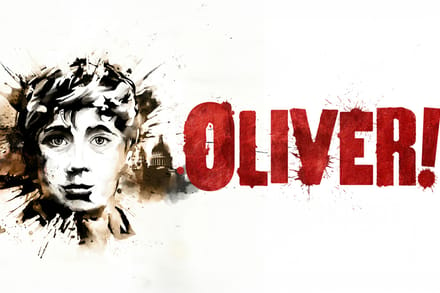
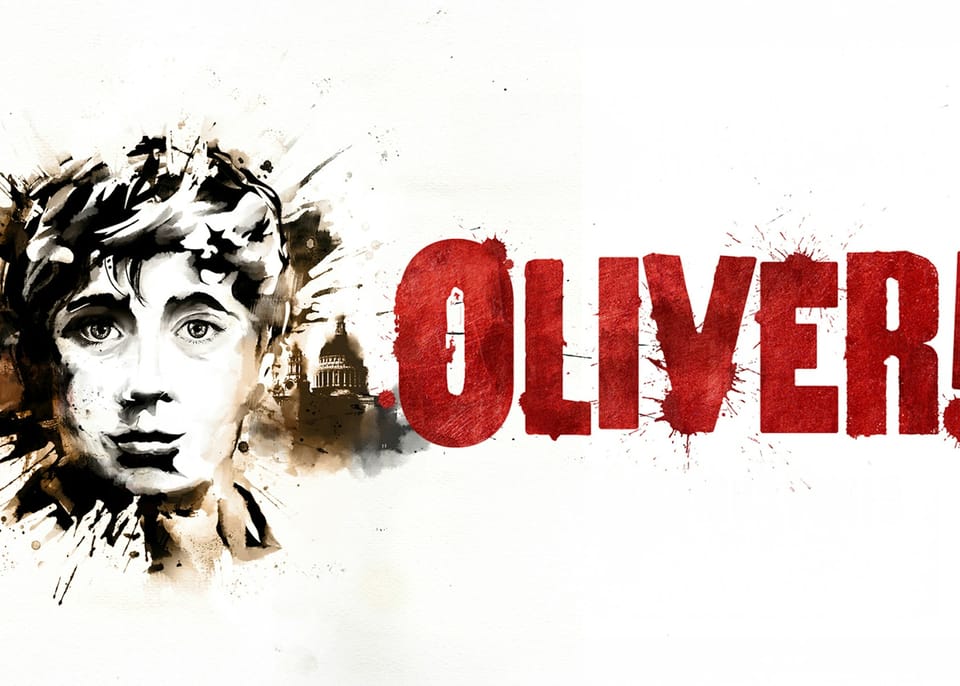
La nouvelle production spectaculaire de Cameron Mackintosh du musical bien-aimé de Lionel Bart revient dans le West End au Gielgud Theatre, mise en scène et chorégraphiée par Matthew Bourne. Réservez vos billets pour Oliver!, le spectacle que les critiques qualifient de 'triomphal' et 'incontournable'.
Soyez les premiers à accéder aux meilleurs billets, aux offres exclusives et aux dernières nouvelles du West End.
Vous pouvez vous désabonner à tout moment. Politique de confidentialité
The Gielgud Theatre, originally called the Hicks Theatre, opened on 27 December 1906. It’s first two productions, the musicals The Beauty of Bath and My Darling, were both written by Seymour Hicks, who the theatre was named after. When Hick’s wife missed several performances of The Dashing Little Duke (1909) due to illness, he stepped into the role personally.
In that same year, Charles Frohman became sole manager of theatre and quickly renamed it the Globe Theatre. Lady Randolph Churchill (Winston Churchill’s mother) wrote the reopening production, His Borrowed Plumes. The next two decades were peppered with successful productions such as Fallen Angels in 1925, Call It a Day in 1935 (which ran for 509 performances), and John Gielgud’s production of The Importance of Being Earnest in 1938 (in which Gielgud both starred and directed).
Gielgud’s next production, Christopher Fry’s The Lady’s Not for Burning, has a successful premiere in 1949, and that success was followed up in the next decades with A Man For All Seasons (1960, also its stage premiere), There’s a Girl in My Soup (1966, ran for 1,064) and Daisy Pulls it Off (1983, 1,180 performance, the theatre’s longest run).
With the opening of Shakespeare’s Globe on the South Bank, the theatre was renamed the Gielgud Theatre in 1994, both in honor of the actor’s contribution, and to avoid public confusion over two similar venue titles. An extensive refurbishment took place between 2007-8.
Blithe Spirit (2014)
Strangers On A Train (2014)
Private Lives, The Audience, Strangers on a Train (2013)
Chariots of Fire (2012)
The Umbrellas of Cherbourg, Lend Me a Tenor, The Ladykillers (2011)
Hair, Yes Prime Minister (2010)
Enjoy, Avenue Q (2009)
Gilbert and Sullivan Season, God of Carnage, Six Characters in Search of an Author (2008)
Equus, Macbeth, Nicholas Nickleby (2007)
The Crucible, The Canterbury Tales, Frost/Nixon (2006)
Don Carlos, Some Girls, And Then There Were None (2005)
All’s Well That Ends Well, One Flew Over the Cuckoo’s Nest (2004)
Tell Me on a Sunday (2003)
Box office closed · opens 12:30pm
These are the box office (ticket desk) hours supplied by Google. The theatre itself opens around 45 minutes before curtain-up — always check your ticket for the performance start time. You can book online any time through British Theatre.
Tube
Piccadilly Circus, Leicester Square
Train
Charing Cross
Bus
14, 19, 38
Parking
NCP Wardour Street, NCP Newport Place, NCP Denman Street, NCP Lexington Street. Chinatown, Soho (Q Park Scheme)
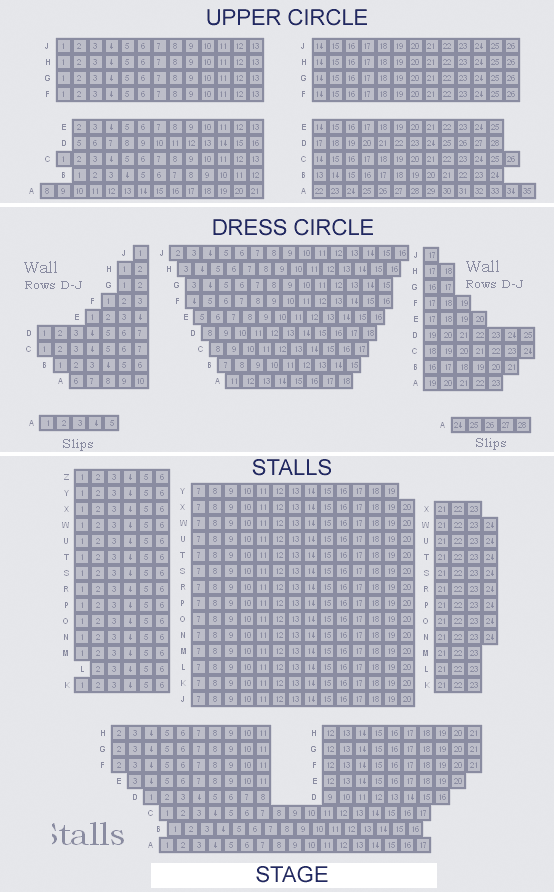
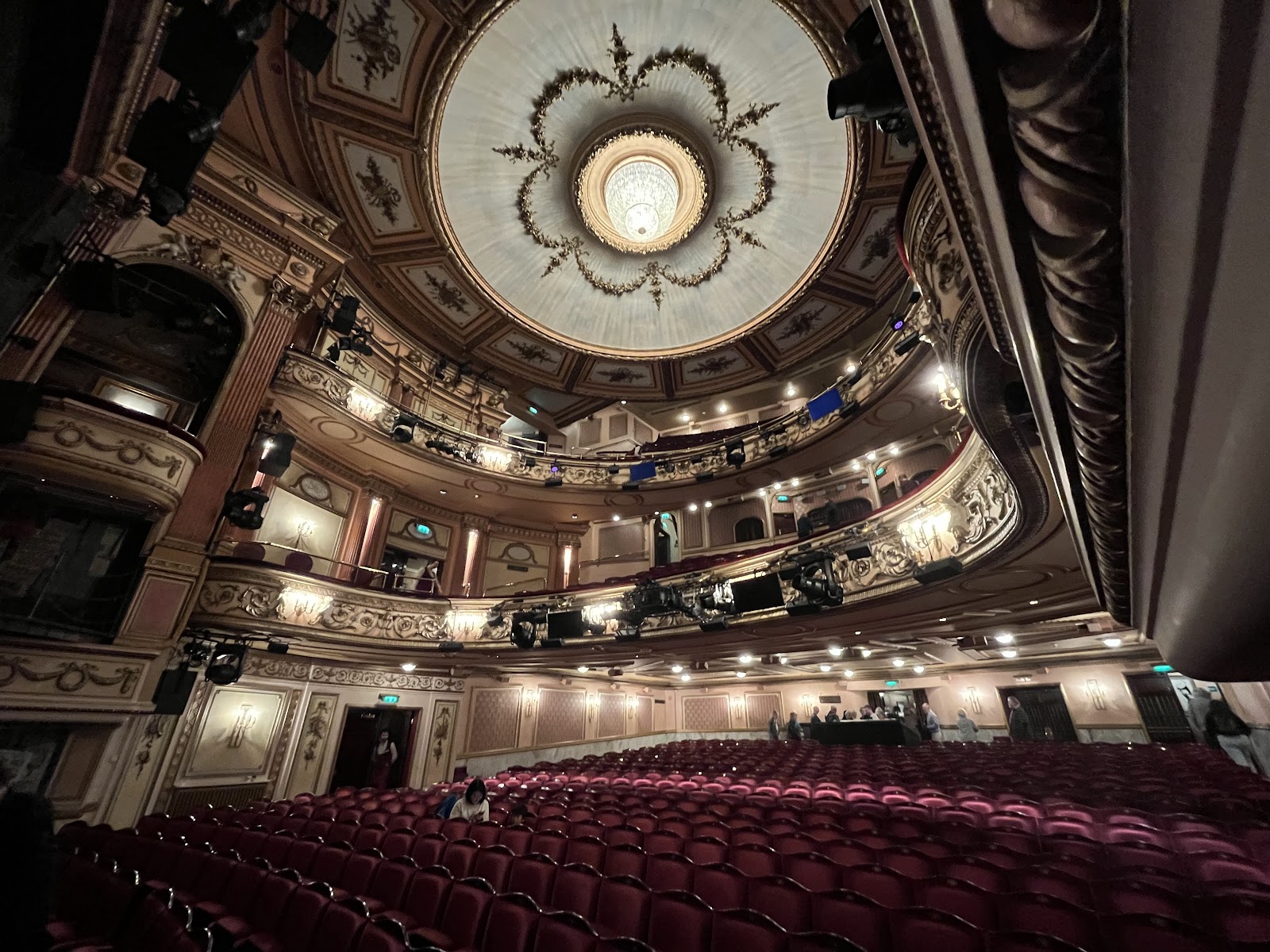
For the best all-round view at the Gielgud Theatre, aim for the centre of the Stalls, roughly the middle rows, where the rake and sightlines are strongest. If you want to be closer to the stage, the front and centre of the Stalls puts you right in the action, while the centre of the Dress Circle gives a cleaner elevated view of the whole stage. The theatre holds just under 1,000 across three levels: the Stalls, the Dress Circle and the Grand Circle.
| Level | Best for | Worth knowing |
|---|---|---|
| Stalls | Overall best views, close to the stage | Centre rows are the sweet spot. Front rows sit low against a raised stage, and the Dress Circle overhang clips the top of the stage from the rear rows. |
| Dress Circle | A clean, elevated head-on view from the centre | The curve of the circle means seats towards the ends of the front rows are angled and can be restricted. |
| Grand Circle | Best value, decent views from the front | You are higher and further back. A safety bar runs across the front and can clip the view from the first few rows, and seats at the far ends of rows are side-on to the stage. |
For Oliver!, the centre of the Stalls is hard to beat, giving you a full, level view of the ensemble numbers and the staging without craning. The centre of the Dress Circle is the strong alternative, lifting you just enough to take in the whole picture while staying close to the action.
The Dress Circle curves quite tightly, so seats towards the far ends of the front rows sit side-on to the stage and lose part of the view. In the rear of the Stalls, the Dress Circle overhang is low and can cut off the top of the stage. On the Grand Circle, a safety bar runs across the front and can clip the view from the first few rows, and seats at the far ends of the rows are angled side-on to the stage, so read a seat view before choosing them.
The Grand Circle is where the value sits. You are further from the stage and higher up, but the front rows of this level still give a solid view for noticeably less than the Stalls or Dress Circle. If you are not sure which level suits you, our West End seating guide explains how the levels compare. Compare live prices and seat availability across every section at Oliver!.
Wheelchair accessible entrance and seats available
Are there adapted toilets?
An adapted toilet is available in the foyer.
Are there facilities for the hard-of-hearing?
There is an infrared system working throughout the auditorium with conventional headsets.
Are guide dogs and/or hearing dogs permitted?
Access dogs are allowed inside the auditorium. Staff can also dog-sit.
Please contact the theatre directly for further information.
dès £24
Spectacle
Gielgud Theatre, London
Spectacle
Gielgud Theatre, London
Spectacle
Gielgud Theatre, London
Fantastic. The theatre is absolutely beautiful, only small but perfect. We went to see Oliver which was incredible. The cast were absolutely amazing. What a superb production. This was our first visit to this particular theatre and it didn't disappoint. It's history is amazing and when you sit a look around, then think of all the wonderful people that have trod them boards it was an honour to sit and see the talent and dedication of the people on that stage. Going to the theatre gives an experience that nothing else gets close to. This performance will hook you for ever, so it's a must to visit.
The Gielgud Theatre looks great from the outside and even better on the inside. Pretty much all of the seating gives an adequately good view with most of it giving a great view because of its design. The stage was larger than normal which had to be to put on such a show as Oliver. The Acoustics from the orchestra was amazing. Plenty of bars and toilets to accommodate such a wide audience.
I went to see Oliver and this musical was amazing! The decor was incredible and they had their own orchestra ! The actors were really good even more the children actors ! I greatly recommend seeing this play if you go to london!
Fantastic Theatre. Warm welcome into a bright and historic theatre. Had a box with private room and butler... All very reasonable too all considered, money wise. Saw Oliver! Top show.
Reviews sourced from Google Maps.
The best seats are in the centre of the Stalls, around the middle rows, where the rake and sightlines give a full, level view of the stage. The centre of the Dress Circle is the strongest alternative if you prefer an elevated head-on view.
Seats towards the far ends of the front Dress Circle rows are angled and can be restricted by the curve of the circle. The rear of the Stalls sits under a low overhang that can clip the top of the stage. On the Grand Circle, a safety bar across the front can clip the view from the first few rows, and seats at the far ends of the rows are side-on to the stage.
The Gielgud Theatre seats just under 1,000 people, around 986 to 995 depending on the configuration. They are spread across three levels: the Stalls, the Dress Circle and the Grand Circle.
Wheelchair spaces are located in the Dress Circle, with companion seats alongside and a ramp providing level access to the front of that level. Accessing the Stalls and Grand Circle involves stairs, so the Dress Circle is the step-free option, and it is best to contact the box office in advance.
The Grand Circle offers the best value for Oliver!. You are higher up and further back, but the front rows of this level still give a solid view for noticeably less than the Stalls or Dress Circle.
The current production at Théâtre Gielgud is Oliver!. Browse and book tickets directly through British Theatre.
The nearest tube station is Piccadilly Circus, Leicester Square.
You can call Théâtre Gielgud on 0344 482 5151. For tickets and bookings, please use British Theatre to secure the best seats.
The Théâtre Gielgud box office (ticket desk) operates: Monday: 4:30 – 7:30 PM; Tuesday: 4:30 – 7:30 PM; Wednesday: 12:30 – 7:30 PM; Thursday: 4:30 – 7:30 PM; Friday: 4:30 – 7:30 PM; Saturday: 12:30 – 7:30 PM; Sunday: Closed. Right now the box office is closed · opens 12:30pm. The theatre itself opens around 45 minutes before curtain-up — and you can book online any time through British Theatre.
Théâtre Gielgud offers wheelchair-accessible seating, wheelchair-accessible toilets. Please contact the venue directly if you have specific access requirements.
Théâtre Gielgud has a capacity of Just under 1,000 (three levels) — small enough to feel intimate but large enough to host major productions.
Avis
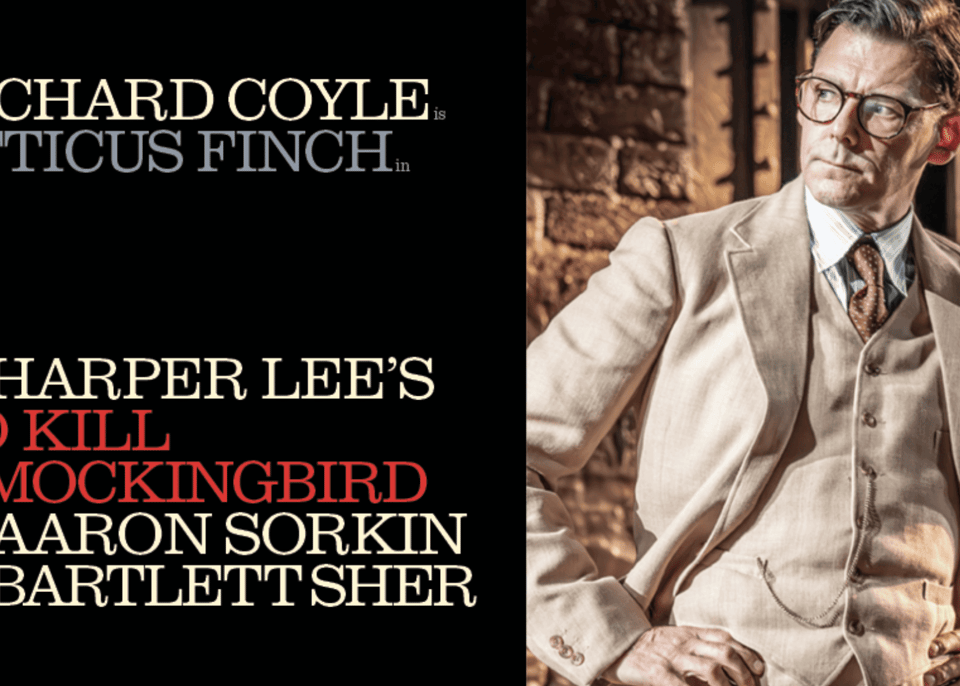
Richard Coyle incarne Atticus Finch dans l'adaptation d'Aaron Sorkin au Gielgud Theatre, un spectacle qui résonne profondément avec les divisions du monde ac…
Susan Novak
Actualités & Critiques
News
De nouvelles images ont été publiées et la réservation a été prolongée pour la production très attendue de 'Oliver !' au Gielgud Theatre de Londres. Votre me…
Susan Novak
Actualités & Critiques
News
J Smith-Cameron et Mark Rylance seront à l'affiche d'une nouvelle production de Juno and the Paycock de Sean O'Casey, mise en scène par Matthew Warchus. Votr…
Douglas Mayo
Actualités & Critiques
News
La nouvelle production de Cameron Mackintosh du classique musical familial Oliver! de Lionel Bart arrive au Théâtre Gielgud en décembre 2024. Votre meilleure…
Douglas Mayo
Actualités & Critiques
News
La nouvelle comédie musicale Opening Night avec Sheridan Smith a annoncé qu'elle fermera désormais le 18 mai 2024, mettant fin à son passage dans le West End…
Douglas Mayo
Actualités & Critiques
Review
Paul T Davies critique Sheridan Smith dans la nouvelle comédie musicale Première, actuellement à l'affiche au Gielgud Theatre. Votre meilleure source d'actua…
Paul T Davies
Actualités & Critiques