
Regional theatre
ALLSTARS: The Music of ABBA
Palace Theatre, Manchester
11 March 2027 to 11 March 2027 (selected dates)
Venue
97 Oxford St, Manchester M1 6FT
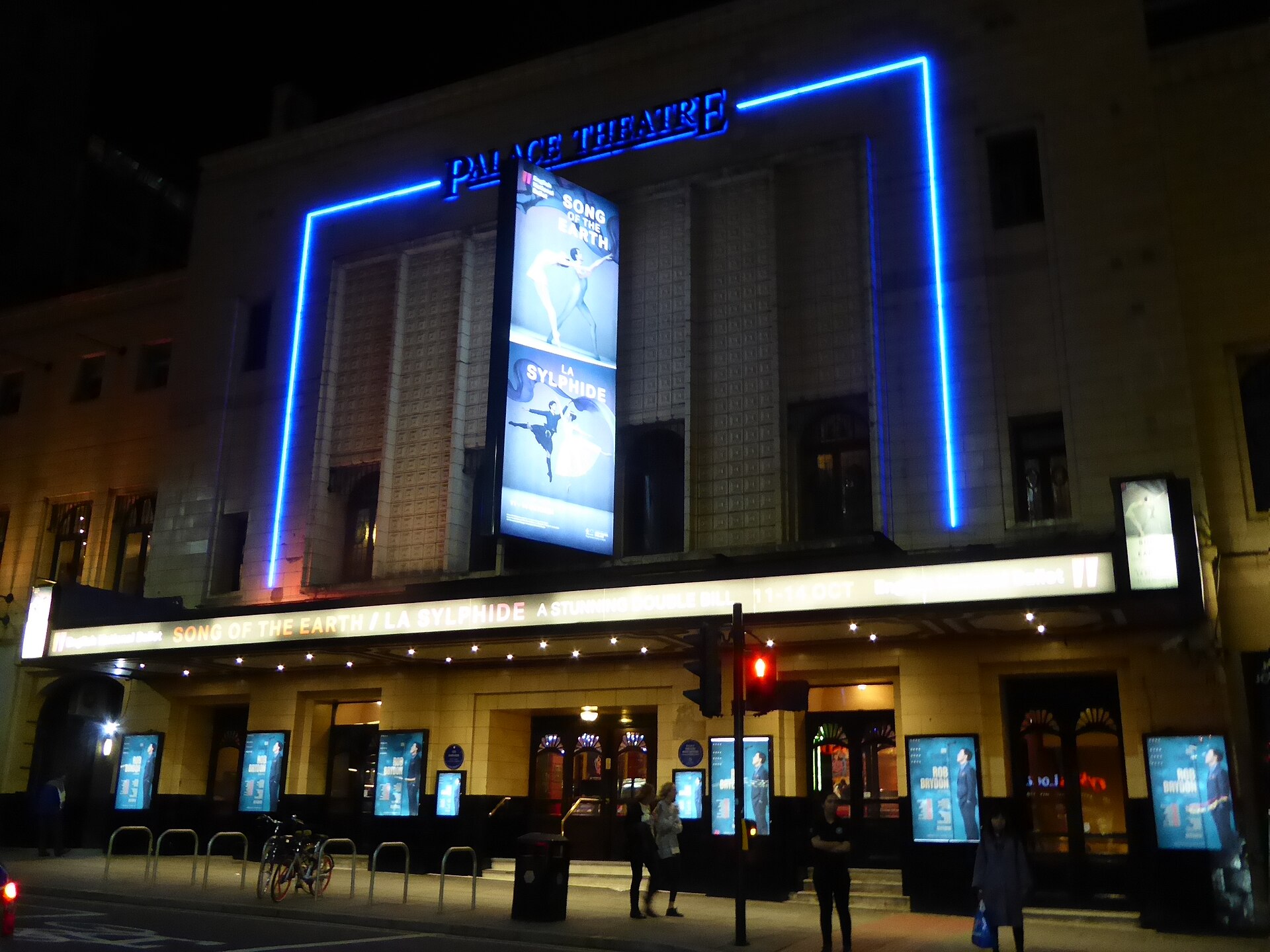
El Palace Theatre se encuentra en Oxford Street, en el centro de Manchester, en la esquina con Whitworth Street, y es uno de los teatros más grandes y mejor equipados fuera de Londres. Catalogado de Grado II y con capacidad para 1.955 espectadores, abrió sus puertas en 1891 según diseños de Alfred Darbyshire y hoy está gestionado por ATG Entertainment junto con su sala hermana, el Opera House en Quay Street. Es conocido sobre todo por los grandes musicales en gira, muchos de los cuales inician aquí su gira por el Reino Unido, además de ópera y ballet, comedia y conciertos de noche única. La estación de Oxford Road se encuentra justo enfrente de sus puertas de entrada.
Photos via Google. Attributions: Ardfern, CC BY-SA 4.0, via Wikimedia Commons
City
Manchester
Capacity
1,955
Current attached shows
15
El Palace Theatre se encuentra en Oxford Street, en el centro de Manchester, en la esquina con Whitworth Street, y es uno de los teatros más grandes y mejor equipados fuera de Londres. Catalogado de Grado II y con capacidad para 1.955 espectadores, abrió sus puertas en 1891 según diseños de Alfred Darbyshire y hoy está gestionado por ATG Entertainment junto con su sala hermana, el Opera House en Quay Street. Es conocido sobre todo por los grandes musicales en gira, muchos de los cuales inician aquí su gira por el Reino Unido, además de ópera y ballet, comedia y conciertos de noche única. La estación de Oxford Road se encuentra justo enfrente de sus puertas de entrada.
The Palace Theatre of Varieties opened on Whit Monday, 18 May 1891, designed by the architect Alfred Darbyshire at a cost of £40,500 and holding an enormous 3,675 people. The opening presentation was the ballet Cleopatra, played to a full house, although the early programming struggled commercially until the theatre widened its net to take in more popular variety performers. It soon earned the affectionate nickname the Grand Old Lady of Oxford Street.
Frank Matcham redecorated and altered the building in 1896 and returned in 1899, when he added a pass door so the manager no longer had to walk outside in the rain to reach backstage. A more thorough interior renovation by Bertie Crewe followed in 1913, taking seven months and reopening the theatre with capacity cut to 2,600. In September 1940 the building took a direct hit from a German bomb during the Manchester Blitz.
Through the early twentieth century the stage welcomed the likes of Gracie Fields, Danny Kaye, Charles Laughton, Judy Garland, Noël Coward and Laurel and Hardy. Audiences fell away in the 1970s and closure loomed, but the theatre was given Grade II listed status on 8 June 1977 and, with Arts Council support, underwent a major internal refurbishment and stage enlargement. It reopened in 1981 with Jesus Christ Superstar and was run by a charitable trust, Norwest Holdings.
Ambassador Theatre Group bought the theatre in 2009, and in March 2020 it took on Charitable Incorporated Organisation status alongside the Opera House. Landmark runs include the regional premiere of Les Misérables, which played for 13 months from 1992 to 1993, the regional premiere of Miss Saigon in 2001, the world premiere of Rufus Wainwright's opera Prima Donna with Opera North in 2009, the first UK performances of The Book of Mormon outside the West End in 2019, and the opening of the first UK and Ireland tour of Hamilton in November 2023.
Train
Oxford Road station is directly opposite the theatre. Manchester Piccadilly is about half a mile away. For Metrolink, the nearest tram stop is St Peter's Square, roughly a five minute walk.
Bus
Many bus routes stop close to the theatre in the heart of the city centre. Routes and times can be planned at tfgm.com.
Parking
Q-Park is ATG's official parking partner and offers 15 per cent off when you pre-book. For Blue Badge holders there are two bays outside the stage door bar entrance, plus on-street parking on Oxford Street as far as Pizza Express and further bays on Whitworth Street, Whitworth Street West (past Gorilla and the Ritz) and Great Bridgewater Street.
The auditorium is arranged over three levels, the stalls at ground level, the circle above and the grand tier at the top, with eight boxes beside the stage. It is a large house, so where you sit makes a real difference to the experience.
Tips for this venue: for large scale touring musicals, central seats a few rows back in the stalls or towards the front of the circle usually give the best balance of view and sound. Check for limited view seats before booking, particularly for captioned performances. Seats average 17.7 inches wide. An interactive view from seat tool is available on the venue's own seating page.

The Palace Theatre aims to make live performance available to everyone, and staff can help with seating, transfers and at seat service.
Book accessible seats through the venue's official box office. The Accessibility Assistance line is 0333 009 5399, or Typetalk on 1800 1 0333 009 5399. ATG's free Access Membership Scheme lets you book accessible seats online and companion tickets where eligible. An audio introduction to the Palace Theatre and Opera House is available on SoundCloud.
Regional theatre
Palace Theatre, Manchester
11 March 2027 to 11 March 2027 (selected dates)

Touring

Touring

Touring

Regional theatre
Palace Theatre, Manchester
7 October 2026 to 8 October 2026 (selected dates)

Touring
Liverpool Empire Theatre
15 October 2026 to 25 October 2026 (selected dates)

Touring

Touring

Touring

Touring
Palace Theatre, Manchester
11 February 2027 to 30 October 2027 (selected dates)

Touring

Touring

Regional theatre
Palace Theatre, Manchester
26 October 2026 to 26 October 2026 (selected dates)

Touring

Touring
Touring
Regional theatre
Palace Theatre, Manchester
27 September 2026 to 27 September 2026 (selected dates)

Regional theatre
ATG Tickets gestiona las reservas y la atención al cliente. Podemos recibir una comisión cuando reservas.
Wed 7 Oct 2026; Thu 8 Oct 2026
On sale
Ver entradas en ATG TicketsWed 21 Oct 2026 - Sun 25 Oct 2026
On sale
Ver entradas en ATG TicketsThe Palace hosts major touring musicals, opera and ballet, plays, comedy and one night concerts, along with backstage tours and workshops. The latest confirmed dates are shown in the listings on this page, and tickets are sold through the venue's official box office.
The theatre is at 97 Oxford Street, Manchester, M1 6FT, on the north-east corner of the junction with Whitworth Street in the city centre.
Oxford Road railway station is directly opposite the theatre and Manchester Piccadilly is about half a mile away. The nearest Metrolink stop is St Peter's Square, around five minutes on foot, and many bus routes stop nearby, with journey planning at tfgm.com.
Q-Park is the official parking partner and pre-booking online gives 15 per cent off. Blue Badge holders will find two bays outside the stage door bar entrance, plus on-street bays on Oxford Street, Whitworth Street, Whitworth Street West and Great Bridgewater Street.
The theatre now seats 1,955. Its original 1891 capacity was 3,675, which was reduced over successive renovations.
Yes. There are four wheelchair spaces with companion seats in the circle, a lift from the ground floor to the circle level, accessible toilets on that level and hearing enhancement systems in the auditorium. Audio described, captioned, BSL interpreted and relaxed performances run through the season, and the Accessibility Assistance line is 0333 009 5399.
It opened as the Palace Theatre of Varieties on Whit Monday, 18 May 1891, designed by Alfred Darbyshire at a cost of £40,500. It was listed Grade II in 1977 and reopened in 1981 after a major refurbishment.
Central stalls seats a few rows back give a strong view and the best results for hearing loop, audio described and captioned performances, while rows AA to C suit anyone needing a closer view. The circle offers a wide view of the whole stage and is where the wheelchair spaces and limited mobility seats are located. The grand tier is the highest and most distant level.
Palace Theatre Manchester hosts a rolling programme of touring productions. The current what's-on list with dates, last checked 2026-09-21, is further up this page, and tickets are sold through the venue's official box office.
Palace Theatre Manchester is located at 97 Oxford St, Manchester M1 6FT.
Palace Theatre Manchester has a capacity of 1,955 — small enough to feel intimate but large enough to host major productions.

News
Después de haber conquistado Broadway y el West End de Londres, se anuncia la gira del Reino Unido de Hamilton a partir de finales de 2023. Las entradas ya e…

Douglas Mayo
Noticias y Reseñas
News
Las entradas con descuento para las funciones previas de El Libro de Mormón salieron a la venta esta mañana en el Palace Theatre de Mánchester y se desató la…
Douglas Mayo
Noticias y Reseñas
Misc
El Palace Theatre Manchester es uno de los principales lugares de entretenimiento de la ciudad. Descubre qué hay en cartel en el Palace Theatre Manchester. L…
Douglas Mayo
Noticias y Reseñas