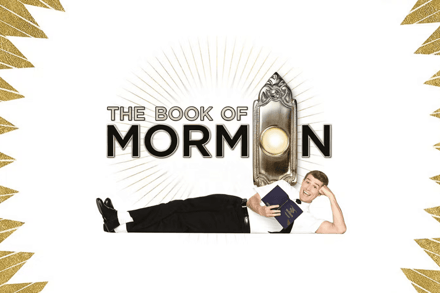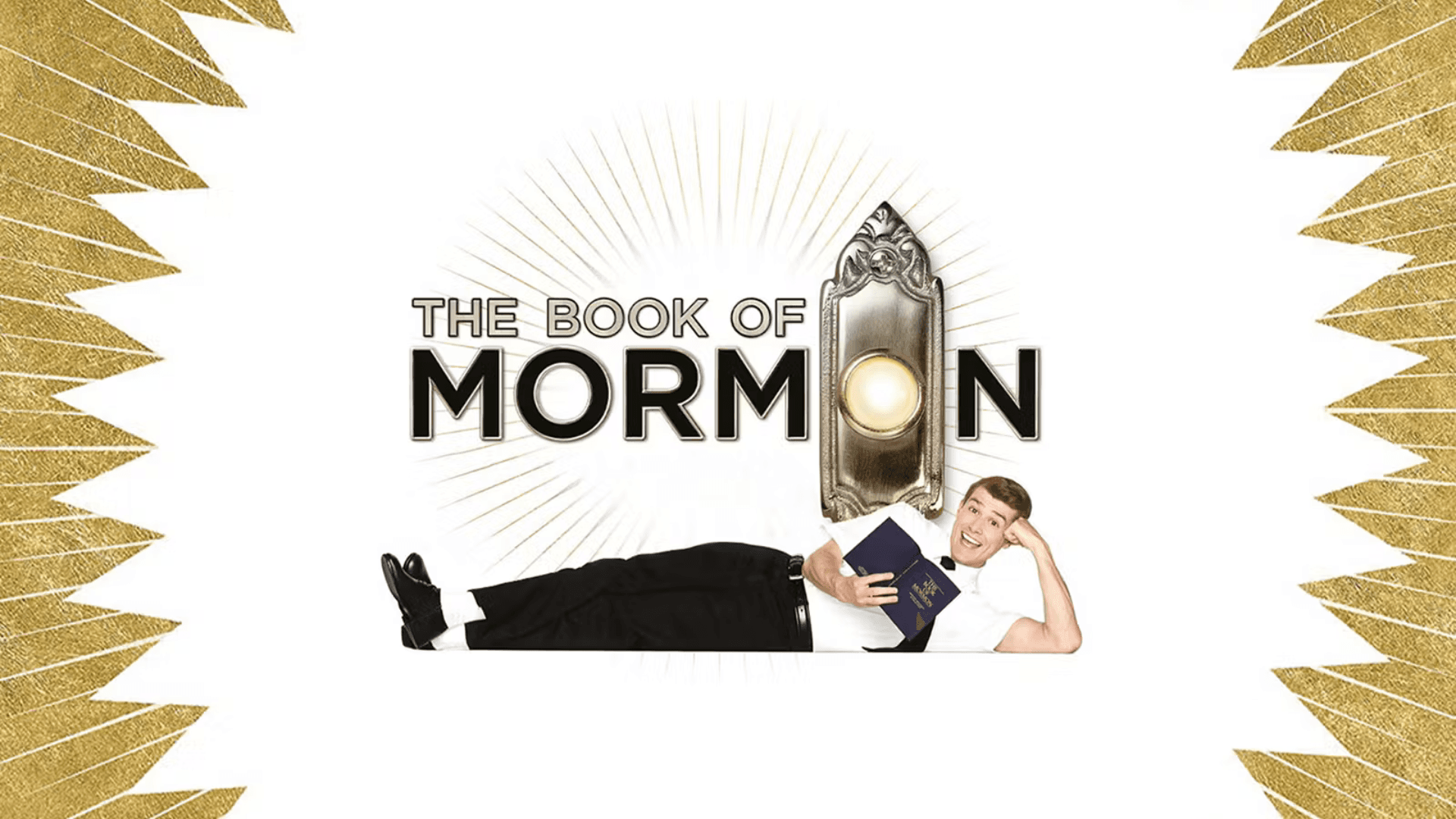
The Book of Mormon is one of the most celebrated and controversial musicals of the past two decades, winner of nine Tony Awards including Best Musical when it opened on Broadway in 2011, and consistently one of the most talked-about shows in the West End since its London opening in 2013. The Book of Mormon plays at the Prince of Wales Theatre on Coventry Street. This guide covers the show's content, age guidance, the theatre, seating options and practical advice for a visit.
The Book of Mormon was written by Trey Parker, Matt Stone and Robert Lopez, the combination of Parker and Stone (creators of South Park) with Lopez (co-writer of Avenue Q and, later, Frozen's "Let It Go") producing something that is both the most offensive and one of the most technically accomplished musical theatre scores of its era. The show arrived in London in 2013 following its extraordinary Broadway run and has been a fixture of the West End ever since.
The show's reputation precedes it, and most audience members arrive with a reasonable understanding of what they are walking into. For those who do not: The Book of Mormon is a deeply satirical musical that takes the Mormon religion, American cultural exceptionalism, the history of missionary work in Africa and several other targets as objects for sustained and very explicit comedy. The show is not for everyone, but for audiences whose tastes run to sharp satirical work, it is one of the most brilliantly constructed pieces of musical theatre available in London.
Elder Price and Elder Cunningham are Mormon missionaries assigned to Uganda, a posting that Elder Price considers beneath his ambition. He has always believed that he is destined for something significant, specifically for Orlando, Florida. Elder Cunningham, his partner, is well-meaning, enthusiastic and fundamentally incapable of telling the truth, a quality that becomes central to the story's resolution.
In Uganda, the two elders encounter a community living under the shadow of a brutal local warlord. Their mission is to convert the local population to Mormonism; the mission's previous two years have yielded no converts. As Elder Price's faith is shaken by the gap between what he has been taught and the reality he encounters, Elder Cunningham's talent for improvisation and narrative invention takes over.
The show's third act turns on Elder Cunningham's improvised version of Mormonism, which incorporates elements of Star Wars, Lord of the Rings and several other narratives into a hybrid mythology that speaks more directly to the community's immediate experience than the official teachings. The consequences of this intervention, and what it says about the nature of faith, storytelling and the desire for meaning, give the show its unexpected emotional depth.
The Book of Mormon contains significant profanity, very explicit sexual references and content that will be offensive to members of the Mormon faith and to anyone who takes religious belief very seriously. The show also deals with AIDS, female genital mutilation and extreme violence in the context of the community the missionaries encounter, though all of these subjects are handled through comedy rather than dramatic realism.
None of this is accidental or careless. The show is built by people who understand satirical comedy at a very high level, and the offensiveness is deployed with precision. But audience members who are not comfortable with this kind of material should be aware that the show is consistent in its approach from beginning to end.
The age guidance is sixteen years and above. This is a strict guidance that reflects the content, and it should be taken seriously. Younger teenagers will not be turned away at the door, but the content is genuinely not appropriate for children or early teenagers.
The Book of Mormon runs for approximately two hours thirty minutes, including one interval.
The Prince of Wales Theatre is at 31 Coventry Street, London W1D 6AS, between Piccadilly Circus and Leicester Square, close to the Trocadero and a short walk from both stations. The building dates from 1884 in its original form, though the current structure was substantially rebuilt in the 1930s and again refurbished in more recent years. It seats approximately 1,150 people across three levels: Stalls, Royal Circle and Grand Circle.
Stalls is the ground level. For a comedy musical like The Book of Mormon, the energy of the performance is particularly well experienced in the Stalls, where the relationship between the cast and the audience is most direct. The mid-Stalls central section, roughly rows D through N, gives the best combination of proximity to the performers and a clear view of the staging. The front rows are very close and excellent for audience members who want maximum immersion in the performance.
Royal Circle is the first balcony and provides an elevated view of the full stage picture. The front central rows of the Royal Circle are among the most popular positions in the house and give a clear view of the choreography and staging. For a show with complex ensemble numbers and significant staging movement, the Royal Circle overview is very effective.
Grand Circle is the second balcony and the most affordable level. The central section provides a panoramic view of the full staging at a lower price point. The distance from the performers is greater, but the sound quality carries well and the comedic energy of the show reaches this level effectively.
Restricted-view seats at the sides of the Stalls and Circle levels should be avoided for a first visit. The staging of several key sequences uses the full width of the stage and a restricted sightline would cut off part of the action.
By Underground: Leicester Square station (Northern and Piccadilly lines) is approximately three to five minutes on foot. Piccadilly Circus station (Bakerloo and Piccadilly lines) is approximately five minutes on foot.
By bus: Coventry Street and the surrounding area of Piccadilly and Leicester Square are served by multiple bus routes.
By National Rail: Charing Cross station is approximately twelve to fifteen minutes on foot via the Strand.
By car: The area is within the London Congestion Charge zone. Public transport is strongly recommended.
The Book of Mormon is unusual in the West End landscape because of the combination of satirical edge and technical musical theatre skill. The closest comparison in terms of musical ambition and wit might be Hamilton at the Victoria Palace Theatre, though the two shows are very different in subject matter and tone. Hamilton operates in celebration of its historical subject; The Book of Mormon operates through satire of its.
For audiences who have seen The Book of Mormon and want something with a comparable approach to comedy in musical theatre, Avenue Q (when revived) and Wicked (for a very different tonal approach) are natural points of comparison.
For tickets to The Book of Mormon and all West End productions, tickadoo covers full availability with seat maps and pricing. tickadoo also covers gift vouchers for theatre occasions.
How long is The Book of Mormon? The running time is approximately two hours thirty minutes, including one interval.
What age is The Book of Mormon suitable for? The age guidance is sixteen and above. The show contains significant profanity, explicit sexual references and content that is not appropriate for children or younger teenagers.
Where is The Book of Mormon playing in London? The Book of Mormon plays at the Prince of Wales Theatre, 31 Coventry Street, London W1D 6AS, between Piccadilly Circus and Leicester Square.
What are the best seats for The Book of Mormon? The mid-Stalls central section and the front rows of the Royal Circle central section provide the strongest combination of clear sightlines and engagement with the performances. The Grand Circle central section is the best-value option.
Is The Book of Mormon actually funny if you're not familiar with South Park or Mormon culture? Yes. The show works as a piece of musical theatre on its own terms and requires no familiarity with either the creators' other work or Mormon beliefs. The story is told clearly from the opening, and the comedy is accessible without prior knowledge.
Stay in the spotlight
Get the latest theatre news, reviews and exclusive offers straight to your inbox.