Overview
The Lyceum Theatre is one of the grand old names of Covent Garden, and it is still one of the busiest family theatre destinations in the West End. The theatre sits at 21 Wellington Street, a short walk from the Piazza and the Strand, and it is now firmly associated with Disney's The Lion King, which the official production site says is now in its 27th year in London. If you are planning a first visit, this is the sort of house where the building, the neighbourhood and the production all matter. The auditorium is large, the location is central and busy, and arrival is often part of the fun.
The Lyceum has 2,100 seats spread across three public levels. The important point for visitors is that it is a big West End musical house rather than a compact playhouse. That scale is helpful for a show like The Lion King, where processions, puppetry and broad stage pictures are part of the appeal. It also means seat choice matters, because a strong mid-price ticket can feel very different from a premium side seat.
If you are deciding whether the Lyceum suits your group, it is a particularly good fit for families, first-time visitors to the West End and anyone who wants a theatre that is easy to combine with dinner or sightseeing. Covent Garden, the Strand and Trafalgar Square are all close by, so the theatre works well whether you want a quick pre-theatre meal, a longer evening out or a straightforward trip in and out of central London.
History
The site has theatrical roots that go back to the eighteenth century. ATG summarises the story from 1772, while the British Theatre venue archive notes an even earlier building on the site from 1765. What matters in practical terms is that the Lyceum has lived several lives. It has been an exhibition space, a circus, a chapel, a concert room, an opera venue, a playhouse, a ballroom and then a restored musical theatre. Few West End houses can point to a history that broad.
The nineteenth century is especially important to the theatre's reputation. The house became associated with English opera, later returned to spoken drama, and built a formidable literary and acting pedigree. Henry Irving's long tenure made the Lyceum one of the capital's great actor-manager theatres, and Bram Stoker worked there as business manager. That link alone gives the building a place in theatre folklore. The venue archive also records major nineteenth-century runs such as The Bells, Charles I and Hamlet.
The twentieth century was less stable. The Lyceum closed in 1939, became a ballroom in the 1950s and later hosted major music acts before going dark in the 1980s. The turning point came with restoration work in the 1990s. The theatre reopened for musicals in 1996 with Jesus Christ Superstar, followed by Oklahoma!, and then The Lion King arrived in 1999. That production has defined the modern Lyceum. It is the show most theatregoers now associate with the venue, and it has turned the theatre into one of the most recognisable family attractions in the West End.
Current Show
The resident production is The Lion King. The official site lists evening performances from Tuesday to Saturday at 7.30pm, with matinees on Wednesday, Saturday and Sunday at 2.30pm. The running time is about 2 hours and 30 minutes including the interval. The production is recommended for ages 6+, and the venue advises arriving at least 60 minutes early to clear security and find your seats.
That recommendation is worth following. The Lion King is a popular tourist booking, and the Lyceum foyer can become busy well before curtain up. The production's opening sequence also makes some seats especially memorable, because performers and puppets move through the auditorium. If you want the full sense of occasion, the theatre experience starts before the curtain rises.
Seating Guide
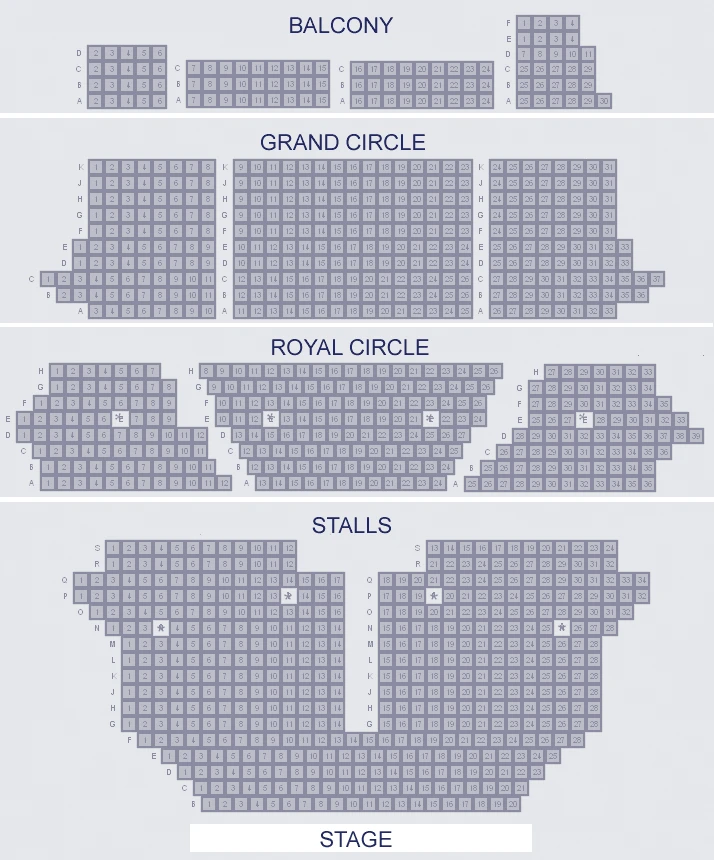
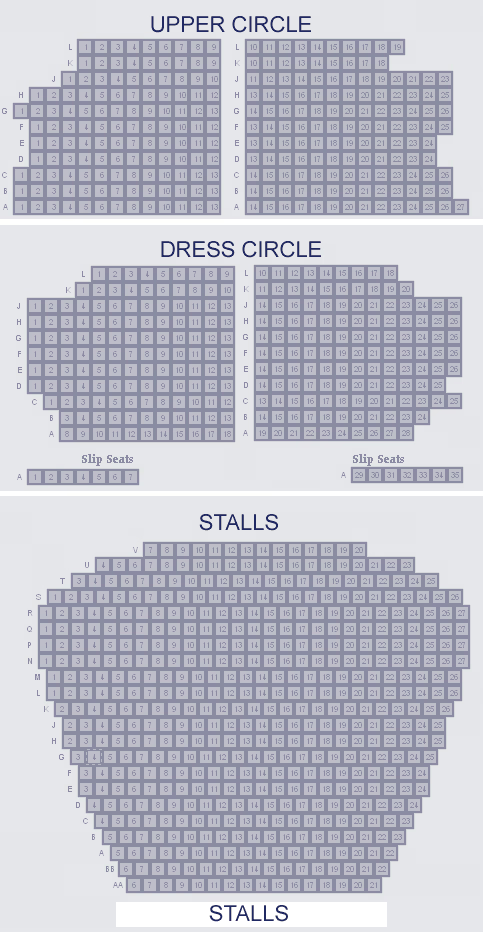
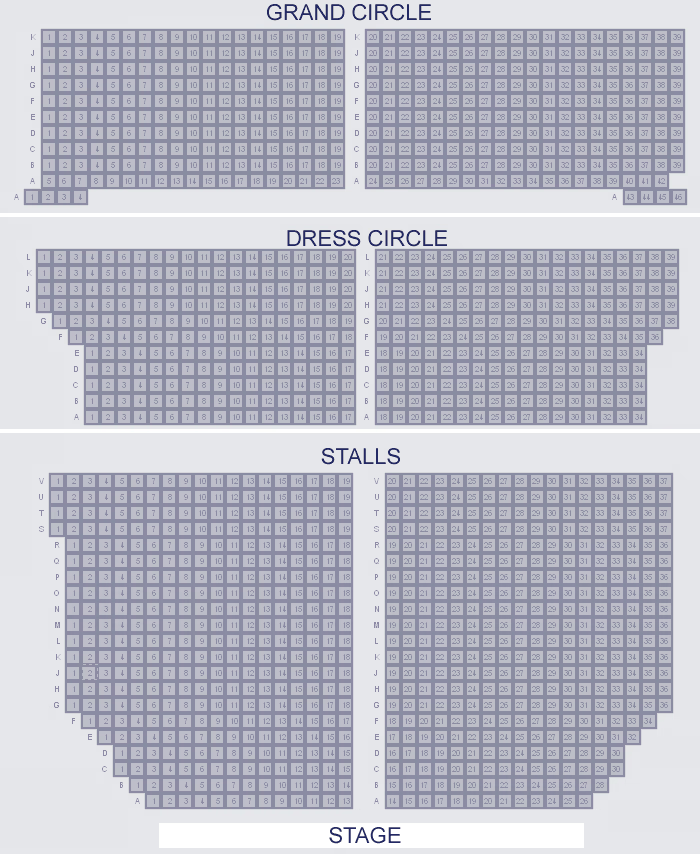
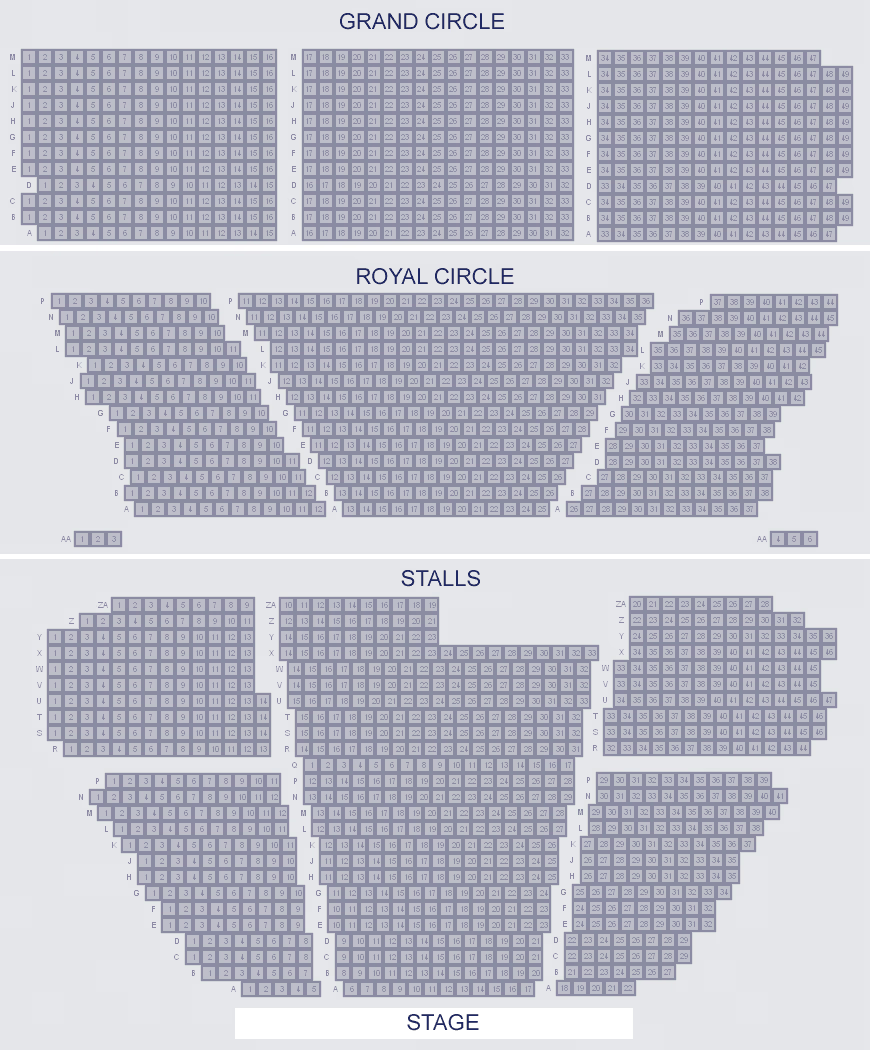
The Lyceum does not have a dress circle, upper circle and gallery in the strict sense. The public seating levels are Stalls, Royal Circle and Grand Circle, so it is better to think in those real-world terms when you book.
Stalls: the Stalls is the most immersive section and the best choice if you want to feel close to the performers and the puppetry. Theatremonkey rates the central block strongly from rows A to P, while SeatPlan highlights rows D to G as especially desirable. Central aisle seats are a particularly fun pick for The Lion King because they bring you close to the opening procession. For value, do not ignore row R or the Stalls Boxes. SeatPlan notes that the boxes are often sold as restricted view, but many theatregoers still rate them highly for atmosphere and price.
Royal Circle: this is often the safest first-time choice. It gives you an elevated, panoramic look at the stage picture, which helps on a visually busy show. Families often prefer it because children are less likely to have heads blocking the action. If you want a balanced view without paying the highest Stalls prices, the front half of the Royal Circle is usually the smart place to start.
Grand Circle: this is the furthest regular level from the stage and usually the budget-conscious option. You lose some facial detail, but the full stage picture reads clearly. On a show built around spectacle, masks and movement, that can still work well. If budget matters most, aim for as central a position as you can afford instead of chasing a cheaper seat right out on the side.
Best seats for the money: for many visitors the sweet spot is not the most expensive ticket in the building. The best-value choices are often central Royal Circle seats, good mid-Stalls seats slightly farther back, or Stalls Boxes if you are happy with a side angle in return for a lower price. Side seats in the front of the house can look tempting on the booking map, but for this particular theatre it is often better to sit a little farther back and more centrally.
Accessibility
The official Lion King FAQ states that the Lyceum is fully accessible to disabled, deaf and visually impaired guests. The venue's access line is 0333 009 5399 and the box office email listed by the production is lyceumbo@atgentertainment.com. Guide dogs are welcome in the auditorium, or can be looked after by theatre staff if you arrange this in advance.
British Theatre's venue archive notes wheelchair spaces, transfer seating, adapted toilets and an infrared system working through the auditorium. The official access page also highlights extra support tools including PicturePath visual timelines and always-on captioning and audio description through GalaPro. If somebody in your party needs a quieter, more predictable visit, that combination of venue access support and show-specific digital support is especially useful.
As with many older theatres, it is worth calling ahead rather than assuming that every entrance or bar route will suit your needs on the day. The access team can advise on the best arrival point, companion tickets and the most practical seat positions.
Getting There
The official show site lists Covent Garden as the nearest Underground station, but Charing Cross, Leicester Square, Embankment, Temple, Holborn and Waterloo are also all viable depending on your route. If you want the most straightforward walk, Covent Garden is the obvious choice. From there, walk through the Piazza and head towards Wellington Street. From Charing Cross, cross the Strand and head north into the theatre district. Both are simple central London walks.
Bus routes listed on the official site include 1, 6, 9, 11, 13, 15, 23, 68, 77A, 91, 176 and 341. If you are travelling by rail, Charing Cross is the handiest mainline station. Drivers can use the Q-Park Theatreland scheme or nearby NCP sites, but central London traffic and parking charges make public transport the easier option for most visits.
Nearby Restaurants and Bars
For a classic pre-theatre meal, The Delaunay on Aldwych is one of the most dependable theatreland choices and explicitly markets its pre-theatre dining. If you want something lively in Covent Garden itself, Balthazar on Russell Street is close enough to keep the logistics easy. For a post-show pint or a more casual start to the evening, The Porterhouse on Maiden Lane is an established Covent Garden bar with several different drinking spaces inside.
If you would rather stay as close as possible to the theatre, the roads around Russell Street, Drury Lane and the Piazza give you plenty of fallback options. That flexibility is one of the Lyceum's strongest points. You are not locked into one hotel bar or one station concourse. You are in the middle of a part of London built for nights out.
Practical Tips
The practical details are a mix of ATG venue policy and Disney show policy. ATG's help centre says the Lyceum cloakroom is available for a charge, but at present it is for suitcases, large bags, rucksacks and pushchairs rather than coats. That matters if you are coming from the airport or with children in tow. The Lion King FAQ confirms that merchandise is sold before the show, during the interval and after the performance.
The same venue guidance confirms bars on site and recommends giving yourself enough time to settle in before curtain up. Official programme prices are not published online, so treat that as an extra on the night rather than something you can budget to the penny in advance. If interval queues are a concern, the simplest move is to order early rather than leaving everything until the bell.
FAQ
What is on at the Lyceum Theatre?
The resident show is The Lion King, which the official production site says is now in its 27th year in London.
What are the best seats at the Lyceum Theatre?
For premium views, look at the central Stalls around rows D to G. For a strong all-round first visit, the Royal Circle is often the safest value choice. For budget bookings, central Grand Circle seats or selected Stalls Boxes are usually the smartest compromises.
Is the Lyceum Theatre accessible?
Yes. The official show FAQ says the theatre is fully accessible to disabled, deaf and visually impaired guests, with booking help available by phone or email.
Does the Lyceum Theatre have a cloakroom?
Yes, but ATG says it currently takes larger items such as suitcases, rucksacks and pushchairs rather than coats, and there is a charge.
What is the nearest Tube?
Covent Garden is the simplest Underground stop for most visitors, with Charing Cross and Leicester Square also close enough to use comfortably.
Stay in the spotlight
Get the latest theatre news, reviews and exclusive offers straight to your inbox.