Overview
His Majesty's Theatre, still widely remembered as Her Majesty's Theatre, is one of the great Haymarket addresses of the West End. It is the long-time home of The Phantom of the Opera, and the building has the sort of ornate, red-and-gold musical theatre atmosphere many visitors picture when they imagine a classic London theatre night. If you are planning a first trip, it helps to know that the theatre is beautiful, historic and very traditional in its layout. In other words, it rewards planning.
The auditorium has 1,216 seats arranged across four levels. That makes it neither tiny nor enormous, but the room is built in the older West End style, with steeper circulation, more variation in sightlines and more difference between sections than you get in a newer building. It is a wonderful theatre for Phantom, but it is not the kind of venue where you should book blind.
One current practical note is the name. The user-facing history of the venue still overlaps with its old title, so many Londoners and older booking guides still refer to Her Majesty's Theatre. Since the coronation of King Charles III, the building has reverted to His Majesty's Theatre.
History
The site history stretches back to 1705, when the original Queen's Theatre was established in tribute to Queen Anne. British Theatre's venue archive notes that the venue developed as an opera house and hosted more than 25 operas by Handel between 1711 and 1739. The site went through fires, rebuilds and name changes across the centuries, following the gender of the monarch.
The current building dates from 1897. Wikipedia's theatre history summary and other heritage sources identify this as the fourth theatre on the site, designed by C. J. Phipps. That makes the present auditorium a late-Victorian house sitting on one of the oldest theatrical sites in the West End. Over time it hosted opera, Shakespeare, dramatic adaptations and major musicals, with notable productions including Pygmalion, Chu Chin Chow, West Side Story, Fiddler on the Roof and Amadeus.
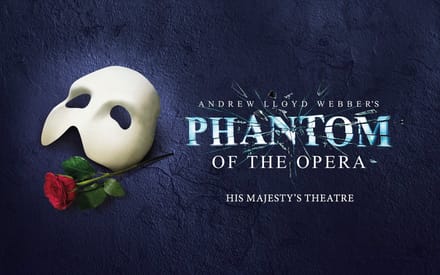
The single most important modern fact is of course Phantom. The Phantom of the Opera opened here in 1986 and has never really ceased to define the building. It is one of the longest-running musicals in West End history, and the theatre's atmosphere, decor and stagecraft suit it so completely that the venue and the show feel fused together.
Current Show
The resident production is The Phantom of the Opera. The official London ticket page lists Wednesday and Saturday matinees at 2.30pm and evening performances from Tuesday to Saturday at 7.30pm. It also gives Haymarket, London SW1Y 4QL as the venue address and highlights Piccadilly Circus, Leicester Square, Charing Cross and Embankment as the nearest stations.
If you are choosing between several musicals, Phantom is one of the shows where the theatre itself is part of the draw. The chandelier, the house style and the older auditorium are part of the experience, so the visit feels especially tied to the venue in a way it would not in a generic modern theatre.
Seating Guide
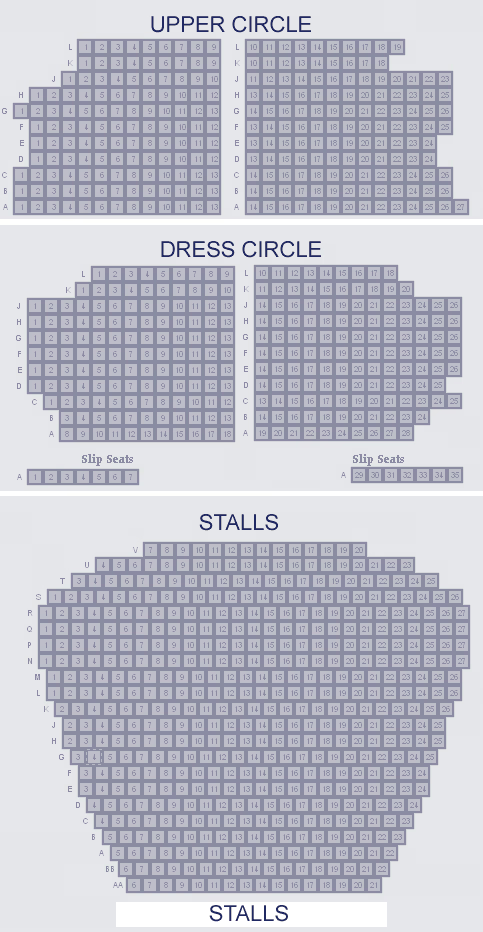
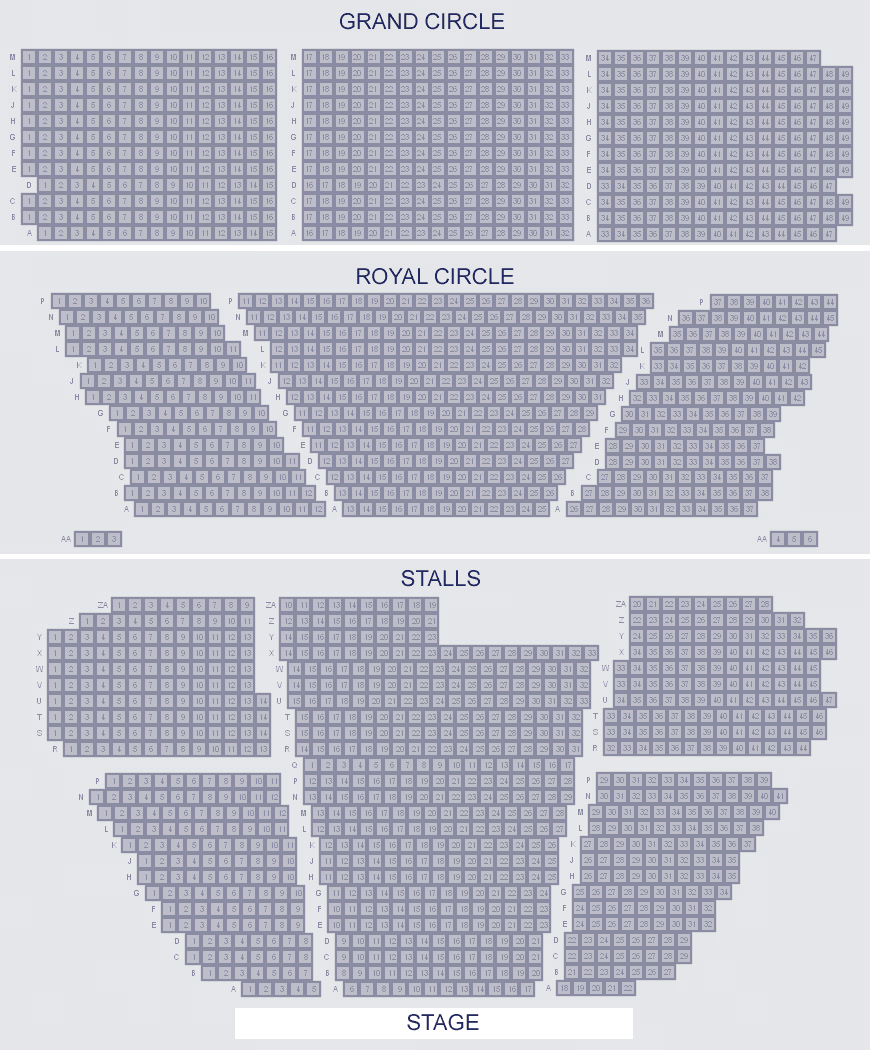
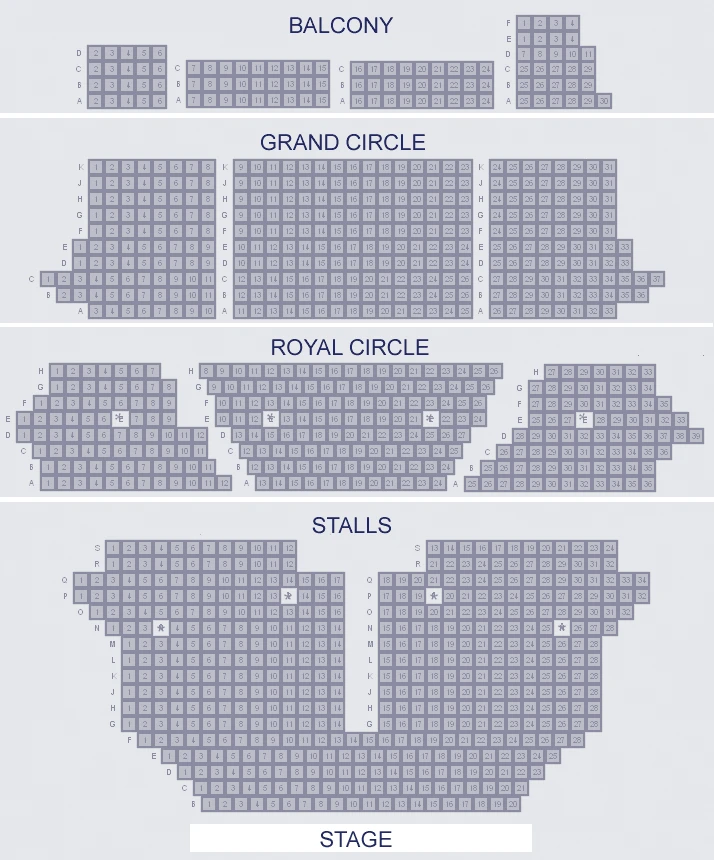
The public levels here are Stalls, Royal Circle, Grand Circle and Balcony. There is no separate gallery. Knowing that helps immediately because the price ladder and the view ladder do not line up perfectly.
Stalls: if you want to feel the weight of the chandelier and sit closest to the action, the Stalls is the obvious starting point. SeatPlan's His Majesty's guide points to rows E to G as especially strong, with multiple audience reviews describing these as full-view seats that are close without being awkwardly near. That seems the right sweet spot for Phantom, where you want both detail and the ability to see the scale of the effects.
Royal Circle: this is often the most balanced section in the theatre. SeatPlan says the Royal Circle offers excellent views, particularly in the centre of the first six rows. That is persuasive because Phantom benefits from a slightly elevated, centred perspective. If I were recommending a safe first booking to someone who wanted quality without paying the very top Stalls premium, I would start with the Royal Circle.
Grand Circle: the Grand Circle is higher, but its heavy rake helps. SeatPlan notes that centre seats here are priced evenly and can offer excellent views. If you are happy to sit above the action rather than close to it, this can be a shrewd money-saving option.
Balcony: this is the cheapest tier and the furthest from the stage. It is best reserved for budget-first bookings or repeat visitors who already know the show. If you want the famous moments to land at full strength on a first trip, the Balcony is usually not where I would begin.
Best seats for the money: rows E to G in the Stalls are premium territory, but some slightly off-centre Stalls seats and central Royal Circle seats can offer better value. SeatPlan even highlights Stalls E28 as a good-value example compared with seats immediately closer to the absolute centre. That is the broader lesson here. At His Majesty's, the best-value seat is often one row back or a little to the side of the obvious premium block rather than a huge step up into the higher circles.
Accessibility
Accessibility at His Majesty's requires more forethought than at a newer venue. SeatPlan's access guide says there is step-free access to the main entrance on Haymarket, while an alternative entrance on Charles II Street gives direct access to the rear of the Stalls and the wheelchair spaces. The same guide says there is no customer lift, so all other levels require steps.
Official London theatre access information lists four wheelchair spaces in the Stalls and an accessible toilet at Stalls level. British Theatre's venue archive also records hearing support through an infrared system and staff support for assistance dogs. If a customer cannot leave the auditorium during the interval, SeatPlan says an at-seat service is available.
The key practical point is simple: if anyone in your party has mobility needs, book and discuss access in advance. This is not the theatre for improvising on the night. The building is beautiful, but it is old and vertically arranged.
Getting There
The official Phantom ticket page lists Piccadilly Circus, Leicester Square, Charing Cross and Embankment as nearby stations. Piccadilly Circus is often the easiest if you want the shortest and simplest walk. Come out towards Haymarket and head south. If you are arriving by rail, Charing Cross is also very convenient and gives you a straightforward walk into the Haymarket and St James's theatre district.
The area is particularly good if you want to make a full evening of it. St James's, Haymarket, Leicester Square and Soho are all within easy reach, so you are not limited to one station bar or one hotel restaurant before heading home.
Nearby Restaurants and Bars
Brumus at Haymarket Hotel is one of the handiest nearby choices if you want an all-day brasserie feel and a proper bar for either pre-theatre dinner or post-show cocktails. If you want something livelier and a little more casual, Masala Zone Piccadilly Circus is close by in the old Criterion building and gives you a dramatic central-London setting before the show. Whitcomb's in Leicester Square is another polished option if you want to turn the evening into more of an occasion.
Because the theatre is right on the edge of the Haymarket and Piccadilly district, you can also keep things simple and meet for a drink first, then eat afterwards once the crowds begin to spread out. That flexibility is part of the appeal of this location.
Practical Tips
There are a few practical details worth knowing before you arrive. Official ticketing and venue information confirms programmes, ice creams and other refreshments are sold inside the theatre, but a current standalone programme price is not prominently published online, so it is safest to budget for it as an extra on the night.
Do not assume you can arrive with bulky luggage. Current access guidance focuses on step-free routes, wheelchair spaces and small-bag entry, and cloakroom arrangements can vary, so the safest plan is to travel light or use off-site luggage storage if you are carrying suitcases. If you need interval help, the theatre's bars are usually easier to use before the show than during the interval rush.
As with most major long-running musicals, official programme and hospitality information is clearer than merchandising information. If you want a souvenir, buy it early rather than assuming you will have leisurely time after the show.
FAQ
What is on at His Majesty's Theatre?
The resident production is The Phantom of the Opera.
What are the best seats?
For premium views, look at Stalls rows E to G or the centre of the front Royal Circle. For better value, step slightly off the most obvious premium centre seats rather than jumping straight to the highest levels.
Is the theatre accessible?
Yes, but this is an older building and planning ahead matters. Wheelchair access is focused on the Stalls level and there is no customer lift.
Does the theatre have a cloakroom?
Travel light and check current venue guidance before you arrive. Large bags are never a good idea here, and off-site storage is the safer option if you are carrying luggage.
How much is the programme?
A current standalone programme price is not prominently published online, so treat it as an extra purchase on the night.
Stay in the spotlight
Get the latest theatre news, reviews and exclusive offers straight to your inbox.