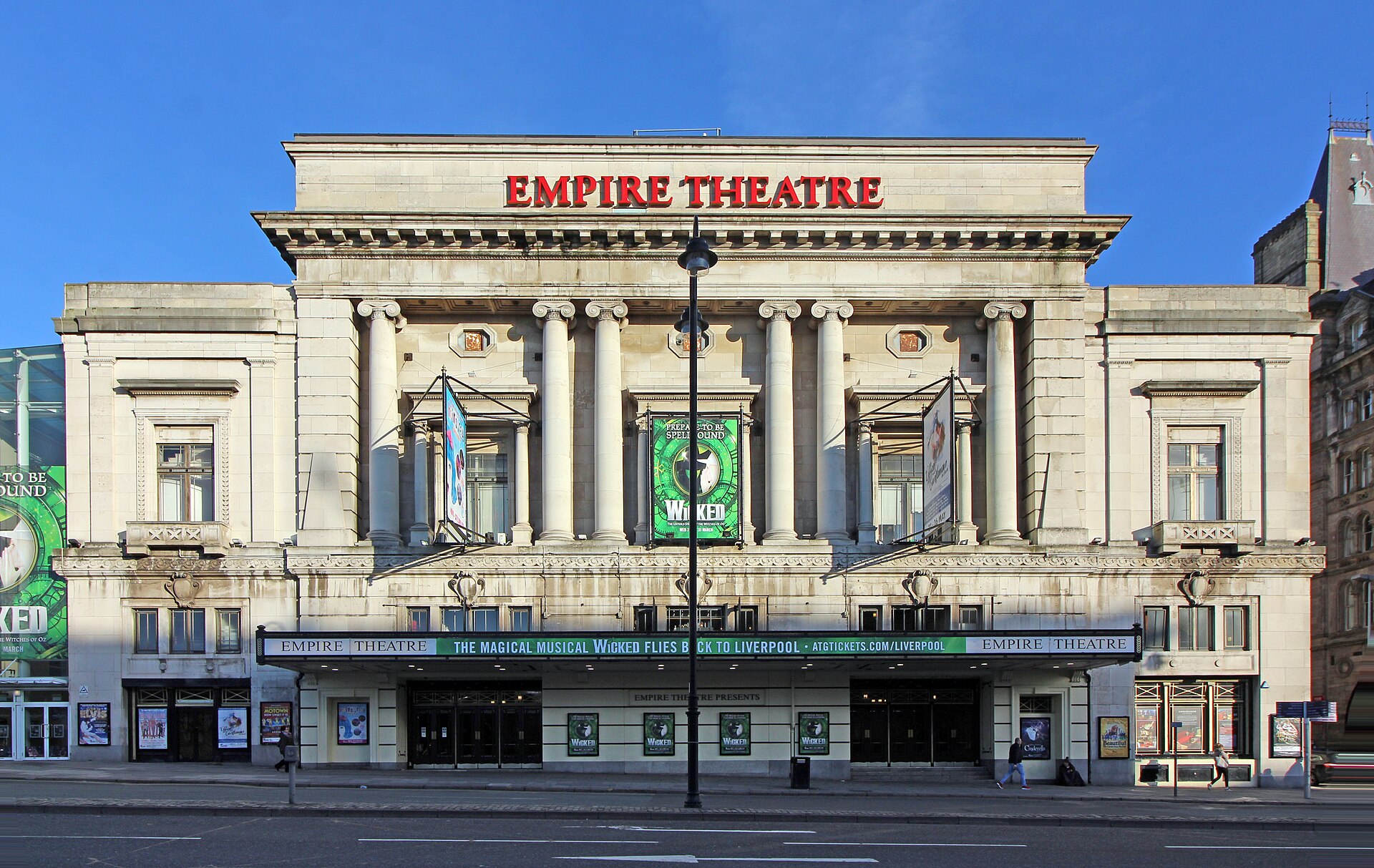
The Theatre Royal Drury Lane on Catherine Street in Covent Garden is one of the oldest and most significant theatre buildings in the world. With a history on the same site stretching back to 1663, it is the oldest continuously licensed theatre in the world, and the current building, which opened in 1812, is one of the grandest auditoria in London. This guide covers the theatre's history, the seating layout, access information and the practical details for a visit.
The Theatre Royal Drury Lane sits at Catherine Street, London WC2B 5JF, between Covent Garden and the Strand. The current building is the fourth theatre to occupy the site: the first opened in 1663 under a royal charter granted by King Charles II; subsequent buildings were destroyed by fire in 1672 and 1809. The present structure, designed by Benjamin Wyatt in a neoclassical style, opened in 1812 and has been in continuous use as a major theatrical venue since.
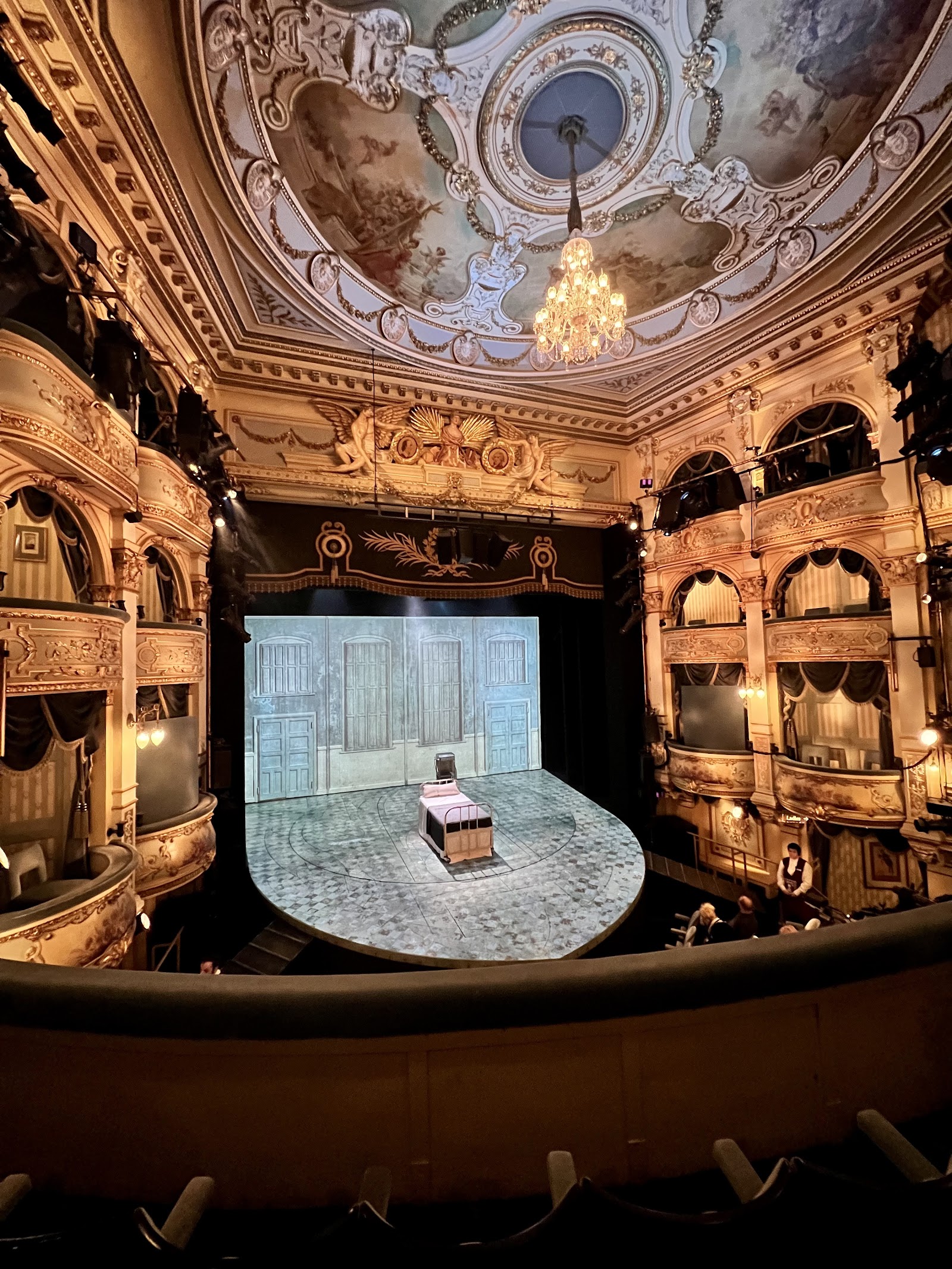
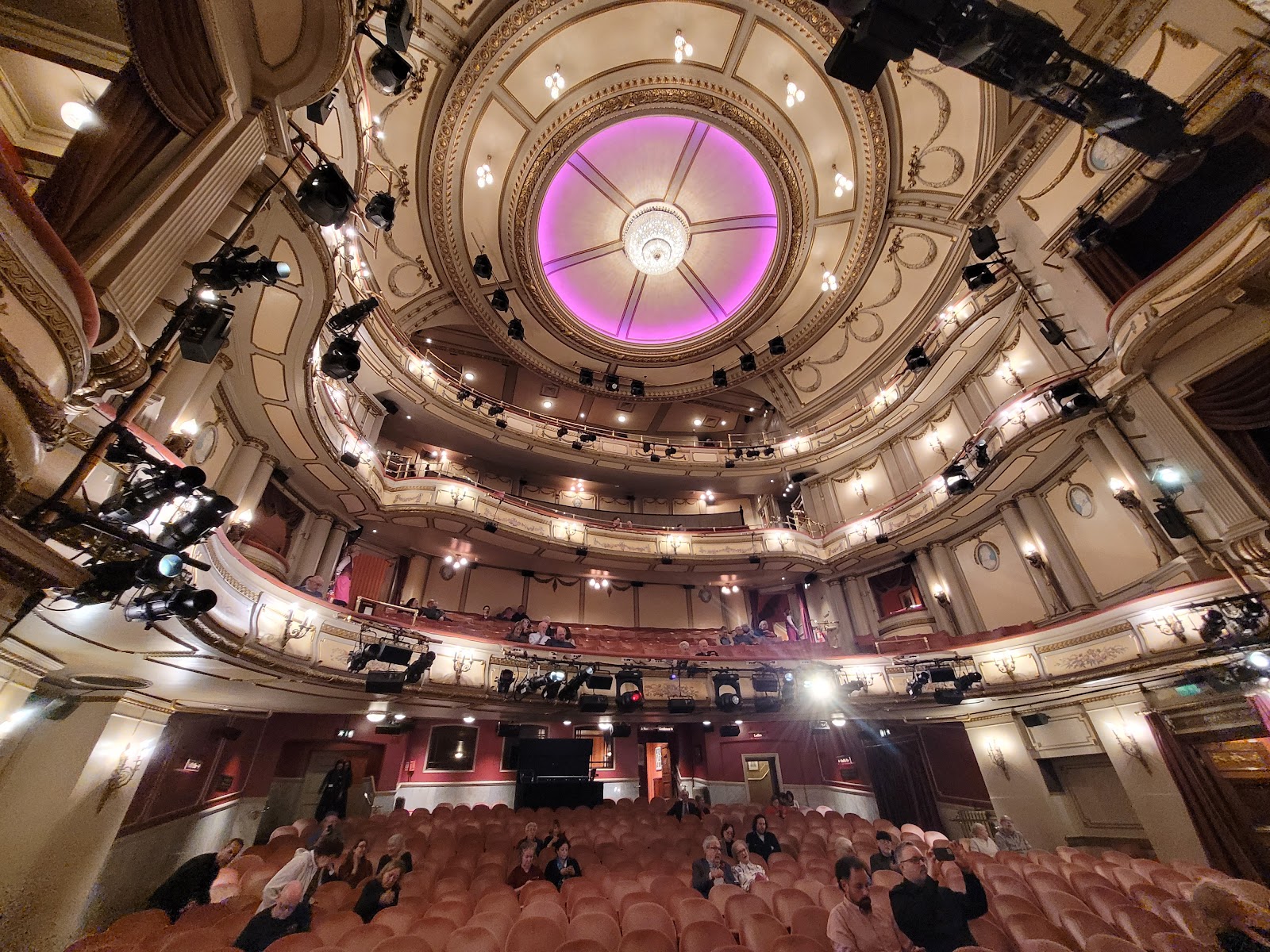
The building seats approximately 2,200 people, making it one of the two largest auditoria in the West End. The auditorium is arranged across four seating levels: Stalls, Royal Circle, Grand Circle and Balcony. The size and grandeur of the interior reflects its history as a royal patent theatre and a venue built to command the centre of London's theatrical life.
The theatre underwent an extensive renovation between 2018 and 2021, during which the auditorium was restored and modernised while retaining the original architectural character of Wyatt's design. The restoration brought the building back to its full capacity and significantly upgraded the technical capabilities, audience facilities and accessibility provisions. The result is one of the best-appointed theatres in the West End, combining the atmosphere of a historically significant building with the physical comfort and technical capability of a contemporary venue.
Disney's Hercules is the resident production at the Theatre Royal Drury Lane, a large-scale musical adaptation of the 1997 Disney animated film. The production makes full use of the stage's size and technical capacity, with the Menken and Zippel score expanded for the stage and a staging that brings the mythological spectacle of the Hercules story to life at a scale that matches the theatre's historic ambitions.
For audience members considering their first visit to Drury Lane, Disney's Hercules offers an ideal combination of large-scale production values and a story with broad family appeal in a venue whose sheer architectural presence is part of the experience.
The Theatre Royal Drury Lane has four seating levels, each with a distinct perspective and character. The size of the house means that the levels differ more significantly from each other than in a smaller West End venue; the decision of where to sit matters more here than at a venue of 1,200 seats.
Stalls is the ground floor and the largest single seating area. The rake is gentle toward the back, which keeps sightlines reasonable from the rear rows. The mid-Stalls central section, from approximately rows F through R, gives the best combination of proximity to the stage and a comfortable angle for viewing the full staging. The very front rows are close and immersive; the rear Stalls provides distance but remains well within the house. For a production with significant staging spectacle and choreography, the mid-Stalls central block is the most recommended ground-level position.
Royal Circle is the first balcony and provides an elevated view of the full stage picture. The front central rows of the Royal Circle are among the most sought-after positions in the house, giving a clear overview of the staging without the distance of the higher levels. For productions that use the full width and vertical height of the stage, the Royal Circle perspective often gives a clearer picture of the complete production design than the Stalls view. The central section is strongly preferable to the sides at this level.
Grand Circle is the second balcony. The central front rows of the Grand Circle provide a panoramic view of the full stage at a lower price point. In a theatre of this size, the Grand Circle represents a greater physical distance from the performers than in smaller West End houses, but the clear central sightline and the ability to see the full staging remain. For audience members where the price is the primary consideration, the Grand Circle central section offers real value.
Balcony is the highest level and the most affordable in the house. The Balcony provides a view from above the action and the distance from the stage is considerable. From the front rows of the central Balcony, the staging is visible and the sound quality is maintained by the theatre's acoustic design, but the connection with individual performers is less than from the lower levels. It is a practical choice for audience members who want to see a large-scale production at the lowest available price.
Restricted-view seats at the Theatre Royal Drury Lane are primarily at the sides of the Stalls and Circle levels, where pillars or the angle of the seating places part of the stage outside the sightline. For a show like Disney's Hercules, which uses the full width of the stage and significant vertical staging, a restricted sightline will cut off part of the action in key sequences. Central seats at any level are preferable to restricted-view side seats even at an equivalent or slightly higher price.
The renovation completed in 2021 significantly improved accessibility across the building, and the Theatre Royal Drury Lane is now one of the best-equipped major West End venues for audience members with access requirements.
Step-free access. The renovation provided step-free access from Catherine Street to the Stalls level and improved the access routes throughout the building. Front-of-house staff are available to guide audience members with mobility requirements to the most appropriate entry point and seating area.
Wheelchair spaces. Dedicated wheelchair spaces are available at the Stalls level. These should be booked in advance through the box office, which can also advise on the best positions and transfer arrangements.
Hearing loops. The auditorium has an induction loop system covering the main seating areas. Audience members using hearing aids with a T-setting should contact the box office in advance for guidance on the most effective positions.
Audio description and captioned performances. Productions at the Theatre Royal Drury Lane schedule audio description and captioned performances throughout the run. Dates are confirmed in advance on the production schedule; checking that the specific performance includes the required provision when booking is advisable.
Assistance dogs. Assistance dogs are welcome at the Theatre Royal Drury Lane. The box office should be notified when booking so that appropriate arrangements can be confirmed in advance.
The Theatre Royal Drury Lane is in Covent Garden and is best reached by Underground.
By Underground: Covent Garden station (Piccadilly line) is approximately five minutes on foot, via Russell Street or Long Acre. Temple station (Circle and District lines) is approximately ten to twelve minutes on foot via the Strand. Holborn station (Central and Piccadilly lines) is approximately ten minutes on foot through Lincoln's Inn Fields.
By bus: The Strand and the surrounding streets of Aldwych and Kingsway are served by multiple bus routes. The specific stop closest to Catherine Street depends on the direction of approach.
By National Rail: Charing Cross station is approximately fifteen minutes on foot via the Strand. City Thameslink is approximately twenty minutes on foot via Kingsway and Aldwych.
By car: The area is within the London Congestion Charge zone. Parking in Covent Garden is extremely limited. Public transport is strongly recommended, and the Underground is the most reliable option for arrival before a performance.
Catherine Street and the surrounding Covent Garden area offer a wide concentration of restaurants, cafes and bars. The main Covent Garden piazza with its market is a short walk to the west. Long Acre, Neal's Yard and the side streets of Covent Garden provide options across all price points within easy walking distance of the theatre.
For a pre-theatre meal, the Covent Garden area can be busy on performance nights. Booking in advance is advisable for the better-known restaurants in the immediate vicinity. The surrounding streets also have good options including the Aldwych and the Strand, which are quieter than the main Covent Garden tourist area.
At approximately 2,200 seats, the Theatre Royal Drury Lane is one of the two largest auditoria in the West End, alongside the Lyceum Theatre. This scale distinguishes it from mid-sized houses like the Victoria Palace Theatre or the Cambridge Theatre, and it means that the range between the best and the least advantageous seats in the house is greater. Seating decisions matter more at a venue of this size, and a central mid-level position is more important than in a smaller theatre where even the sides can be reasonable.
The theatre's historical atmosphere is a feature of the visit that smaller and more modern venues do not replicate. The entrance, the auditorium, the decorated spaces and the building's layered history as a site of performance across three and a half centuries all contribute to an experience that extends beyond the specific production on stage.
For tickets to productions at the Theatre Royal Drury Lane and across all West End venues, tickadoo covers full availability with seat maps and pricing. tickadoo also covers theatre gift vouchers.
Where is the Theatre Royal Drury Lane? The Theatre Royal Drury Lane is at Catherine Street, London WC2B 5JF, in Covent Garden. The nearest Underground station is Covent Garden (Piccadilly line), approximately five minutes on foot.
What is on at the Theatre Royal Drury Lane? Disney's Hercules is the resident production. For the current performance schedule, BritishTheatre.com covers the full West End programme.
What are the best seats at the Theatre Royal Drury Lane? The mid-Stalls central block and the front central rows of the Royal Circle provide the strongest combination of proximity and clear sightlines. The Grand Circle central section is the best-value option. The Balcony provides the most affordable view of the full staging.
How many seats does the Theatre Royal Drury Lane have? The theatre seats approximately 2,200 people across Stalls, Royal Circle, Grand Circle and Balcony.
Is the Theatre Royal Drury Lane accessible? Yes. The 2021 renovation significantly improved accessibility. Step-free access to the Stalls is available and dedicated wheelchair spaces can be reserved through the box office.
Stay in the spotlight
Get the latest theatre news, reviews and exclusive offers straight to your inbox.