The Edinburgh Festival Fringe is the largest arts festival in the world by number of performances, taking place every August across more than 300 venues throughout the Scottish capital. For a first-time visitor, the scale of the programme can be disorienting: thousands of shows across theatre, comedy, cabaret, dance, spoken word and music run simultaneously for three weeks, with new performances starting and finishing throughout the day from early morning until late at night. This guide explains how the Fringe works, how to choose what to see, how to navigate the city and how to plan a visit that is manageable rather than overwhelming.
The Fringe began in 1947 as an unofficial adjunct to the Edinburgh International Festival, with a handful of companies performing without invitations alongside the established programme. It grew into the open-access festival it is today: any performer can register a show at the Fringe, subject to availability, without any artistic selection process. This means the Fringe contains work of every possible quality level, from first-time student theatre to productions by established touring companies and internationally recognised performers, all listed side by side in the same programme.
The absence of a curatorial filter is both the Fringe's defining characteristic and its greatest challenge for the first-time visitor. Understanding that the programme is self-selected rather than editorially curated is the starting point for approaching the festival with realistic expectations.
The Fringe programme is published in the weeks leading up to August and is available online and in printed form. With thousands of shows listed, the programme itself provides limited help in navigating quality. The main tools for making choices are:
Reviews: During the festival, professional reviewers publish assessments of productions in publications including The Scotsman, The Guardian and specialist Fringe review sites. A four or five-star review in a reputable publication is a meaningful signal of quality. Reviews accumulate during the first week of the festival, and the second and third weeks allow visitors to use these assessments to select shows with more confidence.
Recommendations: Word of mouth from other festival-goers is one of the most reliable guides. Shows that are filling up or being discussed at venues are worth investigating.
Venue programmes: Some venues, including the Traverse Theatre, Summerhall, the Pleasance and Assembly Rooms, have their own programming standards and tend to present work of more consistent quality than the fully open Fringe. Building a visit partly around venues with strong reputations is a useful strategy.
Performer and company track records: If a company or performer has a history you can check, previous work gives a basis for assessing the likely quality of a new show.
The Fringe operates across the entire city of Edinburgh, but the major clusters of venues are concentrated in and around the Old Town. The Pleasance Courtyard and Dome, Assembly Rooms and George Square, the Underbelly venues, and the Summerhall arts centre are all within reasonable walking distance of each other and of Princes Street. The Traverse Theatre, Edinburgh's main producing house, sits slightly west of the main cluster but is walkable from the centre.
Some venues are established organisations with dedicated Fringe programmes; others are converted spaces, churches, tents, car parks and pub back rooms that exist only during the festival period. The practical conditions vary enormously: sight lines, acoustics and comfort in converted spaces can be very different from purpose-built theatres, and this is worth factoring into expectations for particular shows.
Grouping shows by proximity to each other reduces transit time between performances and allows for a more relaxed schedule. Leaving at least 45 minutes between shows accounts for overrunning, queues and the time needed to walk between different venue clusters.
Fringe tickets can be booked in advance through the main Fringe box office or directly with individual venues. Booking in advance is advisable for shows that have received strong press coverage or that are known to be popular, particularly for the second and third weeks of the festival when audiences are armed with review information.
Many shows also offer tickets at the door. Arriving at a venue box office shortly before a performance starts can secure a seat for shows that have not sold out in advance, and this approach works well for smaller shows and for those with more modest public profiles.
Prices vary from free or pay-what-you-can shows to ticketed performances at West End-equivalent pricing for the larger and more established productions. Setting a budget per day, rather than attempting to calculate costs across the whole festival, is a practical approach.
For a first visit to the Fringe, three to four days provides enough time to see a range of work without the exhaustion that a longer stay can produce. Attempting to see four or five shows in a day is possible but leaves little time for the incidental pleasures of the festival: street performers on the Royal Mile, conversation with other audience members, and the particular energy of a city given over entirely to live performance.
The weather in Edinburgh in August is variable. Indoor venues range from comfortably cool to very warm depending on the day, and outdoor shows are subject to the full unpredictability of a Scottish summer. Packing layers and waterproofs is standard advice.
Accommodation should be booked well in advance. The city fills to capacity during August, and prices for hotels and short-let apartments rise significantly during the festival period.
The Edinburgh Fringe has a particular role in the broader British theatrical ecology as a development environment for work that subsequently moves into the commercial mainstream. Productions originating at or passing through the Fringe have transferred to London's West End and to international touring circuits. For audiences interested in theatre as a continuing practice rather than simply as a series of individual events, attending the Fringe is a way of engaging with the pipeline that eventually produces the productions seen in commercial venues.
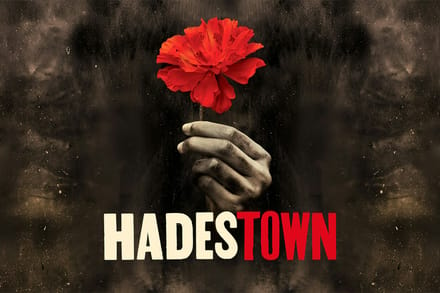
Shows like Hamilton and Hadestown represent the kind of ambitious work that fringe and festival culture has historically nurtured before large-scale commercial production. The Fringe's role as a testing ground for new work gives it a significance in British theatrical life that extends beyond the festival itself.
For the complete current West End and UK theatre programme, BritishTheatre.com lists productions across all London theatre venues and beyond. For tickets to productions in London and to find out what is currently running in the West End, tickadoo provides seat maps and pricing. tickadoo also offers theatre gift vouchers for occasions where flexibility is more useful than a specific booking.
When is the Edinburgh Fringe? The Edinburgh Festival Fringe takes place every August, typically running for approximately three weeks from the first Friday in August. The exact dates vary slightly year to year and are confirmed in advance on the official Fringe website.
How many shows are at the Edinburgh Fringe? The programme typically includes several thousand separate shows across hundreds of venues, making it the largest arts festival in the world by number of performances. The range covers theatre, comedy, dance, cabaret, spoken word, music and other performance forms.
Do I need to book Fringe tickets in advance? Booking in advance is advisable for popular or well-reviewed shows, particularly in the second and third weeks of the festival. Many shows also sell tickets at the door, and this approach can work well for less high-profile productions.
How should a first-time visitor to the Edinburgh Fringe plan their trip? A visit of three to four days allows for a range of shows without exhaustion. Grouping performances by venue location, using reviews to guide choices and leaving adequate time between shows provides a manageable framework. Booking accommodation well in advance is essential as the city operates at near-full capacity throughout August.
Stay in the spotlight
Get the latest theatre news, reviews and exclusive offers straight to your inbox.