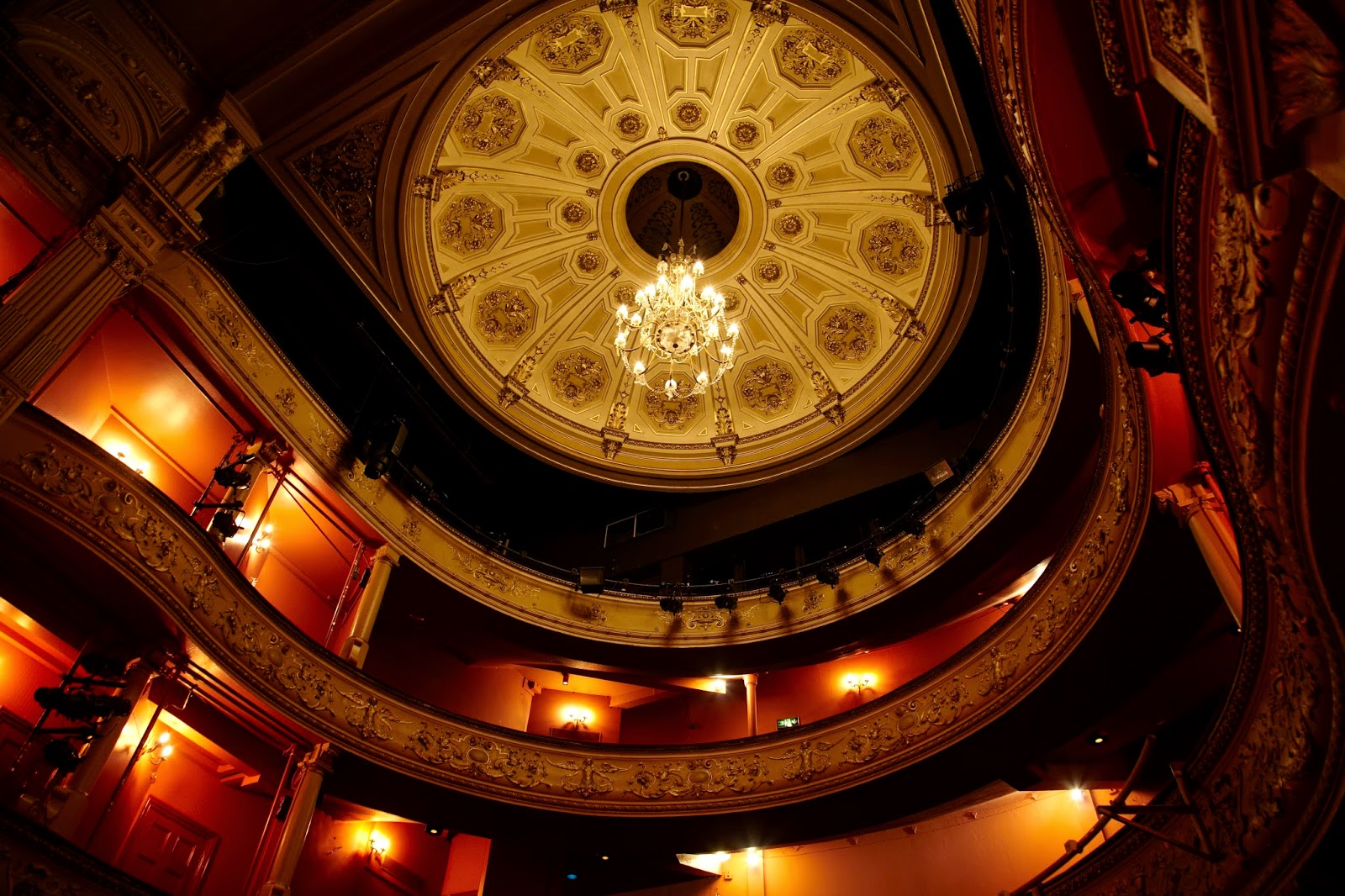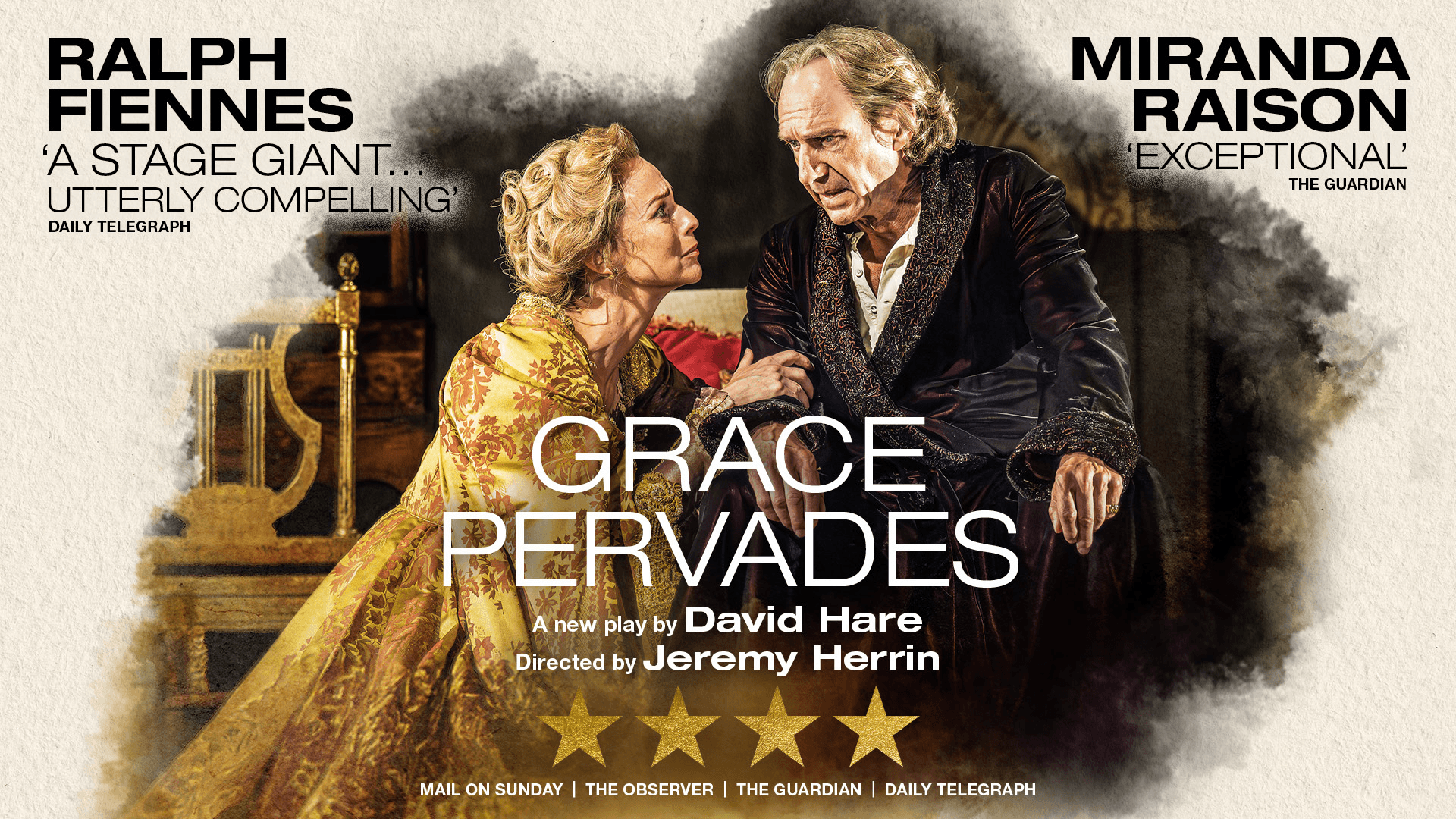
There is a delicious irony at the heart of Grace Pervades, David Hare's sparkling new play now running at the Theatre Royal Haymarket. The stage has been transformed into a recreation of the Lyceum Theatre, that grand old venue which, in our own era, is synonymous with The Lion King and its singing Serengeti inhabitants. But long before Simba took his place on Pride Rock, the Lyceum was the domain of a very different kind of theatrical royalty: Henry Irving, the towering actor-manager who dominated the Victorian stage for a quarter of a century.
Ralph Fiennes steps into Irving's considerable shoes with relish, delivering one of the most entertaining performances currently on offer in the West End. Opposite him, Miranda Raison shines as Ellen Terry, Irving's leading lady and creative counterpart. Together, they anchor a play that is by turns wickedly funny, surprisingly moving, and endlessly fascinating for anyone with even a passing love of theatre.
A Partnership Forged on Stage
David Hare's 32nd play spans 24 years of Irving's stewardship of the Lyceum, from 1878 to 1902, unfolding across 25 carefully crafted scenes. At its core, this is the story of a professional and personal relationship between two artists who could not be more different in temperament, yet who found in each other something irreplaceable.
Irving, as Fiennes portrays him, is a man wrapped in gloom and grandeur. "An evening with me can be very grim," he confesses at one point, and Fiennes milks every drop of deadpan comedy from Irving's melodramatic self-regard. He dresses in black throughout (because, as he explains to Terry during a rehearsal of Hamlet, "I always thought of Hamlet as being the main character" and therefore he, as the lead, must stand out). Irving is unquestionably the star of every room he enters, and Fiennes makes that both magnificent and absurd.
Terry, by contrast, is all warmth, charm and easy confidence. Miranda Raison plays her with a radiant naturalism that feels almost revolutionary in the context of Irving's stiff Victorian excess. The title of the play itself comes from a barbed contemporary review of Terry's acting, which was considered too sensual, too alive: "Grace pervades the hussy." Some critics of the era dismissed her approach as inappropriate for a serious actress, but Hare makes it abundantly clear that Terry's instincts were ahead of their time.
A Play About Theatre That Earns Its Theatricality
Grace Pervades is unashamedly a theatre production about theatre, and it revels in the fact. When Terry complains that "theatrical" is used as a pejorative in the arts ("You don't hear of music being too musical"), the line draws a knowing laugh from an audience that clearly agrees. Hare is not interested in apologising for the art form's inherent extravagance. Instead, he leans into it.
Bob Crowley's set design is a masterclass in elegant pastiche. The stage recreates the painted backdrops and proscenium arch staging of Irving's 19th-century productions, with scene changes concealed behind sumptuous red curtains. Characters regularly address the audience directly, echoing the Shakespearean "aside" and nodding to Irving's deep connection to the Bard. His landmark 1874 production of Hamlet ran for more than 200 performances, an extraordinary feat for a Shakespeare production at the time and a milestone that helped cement his legendary status.
For theatre enthusiasts, the production is littered with delightful easter eggs. A rehearsal scene for Hamlet, in which Irving patronisingly explains to Terry why she cannot wear a black corset as Ophelia, is both a sharp piece of comedy and a quietly devastating illustration of the power dynamics that governed Victorian theatre. These moments reward close attention and a love of theatrical history without ever alienating newcomers to the subject.
Fiennes and Raison: A Masterful Double Act
The central performances are nothing short of superb. Fiennes has always been an actor capable of commanding a stage, and here he channels that authority into a portrayal that is both towering and surprisingly self-deprecating. His Irving is a man convinced of his own genius, yet also dimly aware that the world is shifting beneath his feet. "Give them the unexpected, not the unacceptable," he insists, clinging to his own rules even as modernity threatens to make them irrelevant. As the star of the film The Menu, Fiennes proved he knows how to make a meal out of something, and he brings that same relish to Irving's theatrical excesses.
Raison, meanwhile, gives Terry a grace and vulnerability that provides the emotional anchor for the entire evening. Terry is one of the few people who can puncture Irving's self-seriousness, and Raison handles these moments with a lightness that makes them land perfectly. Her gentle suggestion that "your acting could be improved if, from time to time, you looked at the other actors" is one of the biggest laughs of the night, delivered with such warmth that it stings and soothes simultaneously.
What makes their partnership on stage so compelling is the tension between connection and distance. Irving and Terry are bound together by mutual admiration and shared artistry, but also by broken promises and unfulfilled potential. Hare navigates these emotional currents with characteristic intelligence, never letting the play tip into sentimentality.
More Than a Love Letter
It would be easy to assume that Grace Pervades is simply a nostalgic tribute to the golden age of Victorian theatre. Hare is far too shrewd a writer for that. While the play celebrates theatrical tradition, it also subjects it to rigorous scrutiny. Irving, along with Terry's son Teddy, frequently questions the very purpose of theatre, dismissing it as vain, pointless and self-important. These moments of doubt give the play a philosophical depth that elevates it beyond mere period recreation.
Despite the characters' own insistence that the best plays are often the ones that never open, this production is very much worth experiencing. Hare's dry, matter-of-fact humour is scathing and hugely satisfying. The comedy feels surprisingly modern for a play centred on a man so fixated on preserving tradition, and there is a sharpness to the writing that keeps every scene crackling with energy.
The supporting cast complement the leads effectively, filling out the world of the Lyceum with vivid character work. But this is ultimately a two-hander at heart, and it lives or dies on the chemistry between Fiennes and Raison. Fortunately, their rapport is electric.
Should You Book Tickets for Grace Pervades?
If you have any affection for theatre, and particularly for the rich history of London's West End, Grace Pervades is essential viewing. It is that rare thing: a play about theatre that manages to be both deeply knowledgeable and thoroughly entertaining, never disappearing into insider self-congratulation. David Hare has written one of his most enjoyable works, and Ralph Fiennes and Miranda Raison deliver performances that will linger in the memory long after the curtain falls.
The Theatre Royal Haymarket is the perfect home for a production so steeped in theatrical heritage, and the combination of Crowley's gorgeous design, Hare's razor-sharp writing and two outstanding central performances makes this one of the strongest new plays in the West End right now.
For theatre lovers looking for something smart, funny and beautifully acted, this comes with a strong recommendation. Book early, as word of mouth on this one is likely to be very strong indeed.
Browse all plays currently on in London, explore our complete list of West End shows, or read more theatre news and reviews on BritishTheatre.com.

Susan Novak has a lifelong passion for theatre. With a degree in English, she brings a deep appreciation for storytelling and drama to her writing. She also loves reading and poetry. When not attending shows, Susan enjoys exploring new work and sharing her enthusiasm for the performing arts, aiming to inspire others to experience the magic of theatre.
View profile and all articlesStay in the spotlight
Get the latest theatre news, reviews and exclusive offers straight to your inbox.