Tree
24 January 2015
5 Stars
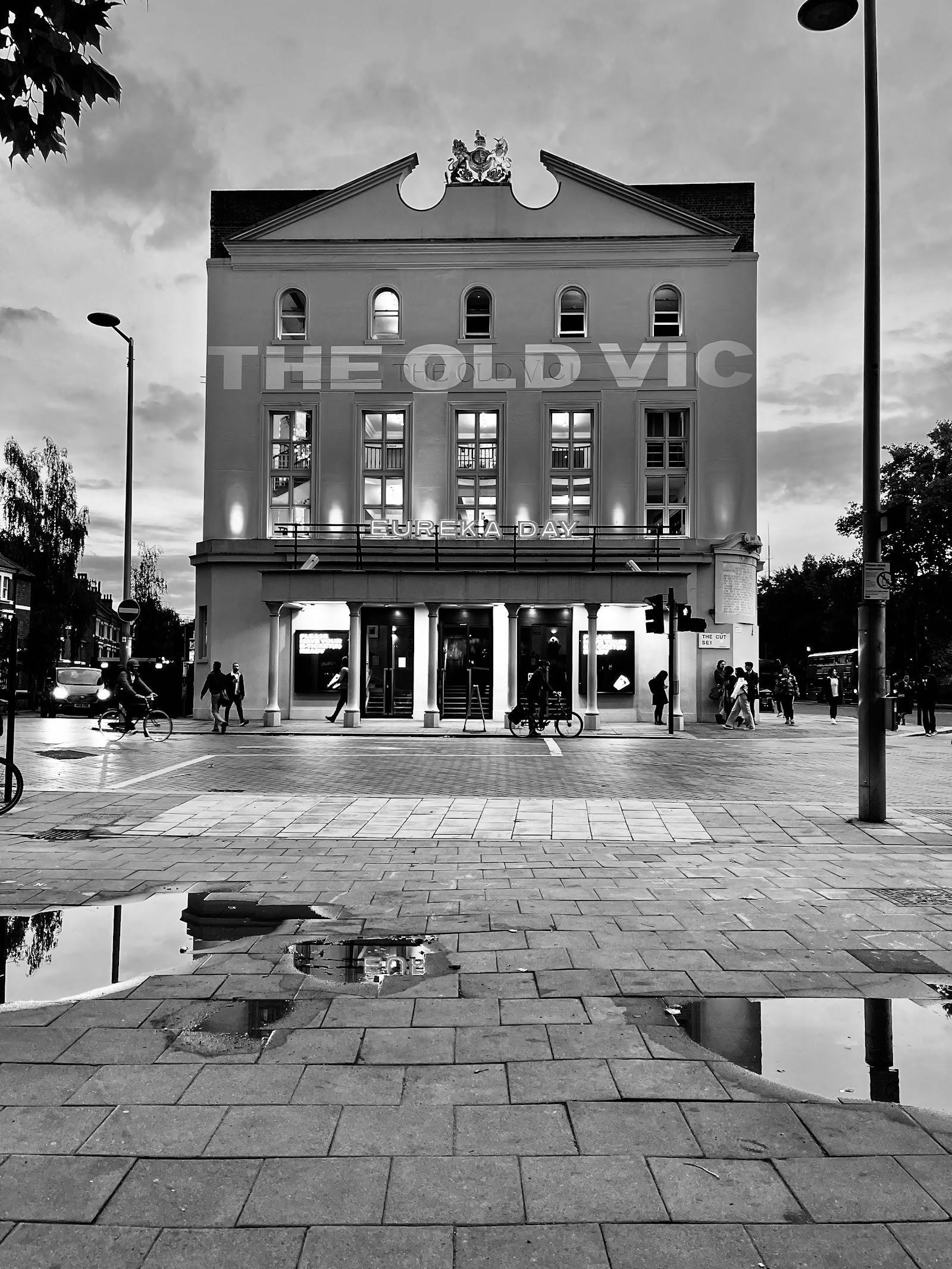
"Are you sure?" She asks uncertainly, looking askance at the man she is with as they trudge away from the Old Vic, slightly resentful of the cold air whipping around her face. "Absolutely", he laughs; then, sort of a confession: "Of course, I have seen it before." She looks at him quizzically. He ploughs on: "You can tell he's lying. Things he says." He identifies his liar and she shakes her head. Not on the same page.
"Like what?" she demands, her voice rising slightly, indignation hovering like a cloud. He shrugs in that irritating 'Look, I know' kind of way and says: "Can't remember specifics. But it's quite clear if you know, as it goes along. Things just don't add up. He's lying the whole time". She says nothing more but the look she gives him suggests she thinks he is wrong or, to be scrupulously fair, that there may be another way to look at it.
I'm with her. Except I think He is completely wrong and has misunderstood the play.
They were discussing Tree, now playing at the Old Vic to packed houses, even at 11am on a crisp Saturday morning. This is a two-hander written by Daniel Kitson and performed by the author and Tim Key. The free programme is silent as to who takes directorial credit but one assumes the actors devised the piece and the manner of performance between them.
It is outstandingly good in simply every way.
The titular tree, built by Take 1 Scenic Services, dominates the in-the-round space at the Old Vic. It is as realistic as any stage tree could hope to be - sturdy, thick at the base, with strong boughs and branches brimming with green leaves that would, in the right afternoon sunlight, produce the most dazzling dappled light effects. It's a great tree - and a symbol of nature. Something worth fighting for.
In the tree is Kitson's hirsute, overall-wearing character. He seems to be a tree hugger of the literal kind, very happy perched high up amongst the branches of the tree. The lower branches of the tree have all gone, so it's not clear how he got up the tree, but he seems utterly content. Meditating perhaps?
Around the tree, marked out by masking tape and signs, are one-dimensional representations of the reserve where the tree stands in solitary splendour. There were other trees, but now they are gone, only the stumps remaining. Juxtaposed against the barren reality of the rest of the space, the tree seems almost magical, as well as majestic.
Key's character, a civil rights lawyer, arrives, slightly out of breath, clearly muddled. Something has gone wrong. He is carrying a picnic cooler box and looking for someone he can't see. He makes a phonecall and discovers that he is not late, but early: he has forgotten to wind back the clocks as the rest of the country has. The woman he has called reassures him and he sets about waiting for the hour to catch up to where he is. He curses himself for the rude note he left the milkman whom he thought was late with deliveries that morning.
Inevitably treeman and lawyer interact. The lawyer is bemused and then befuddled by what treeman is doing in the tree. Treeman wants to know about the woman the lawyer is meeting, how they met; he seems the kind of lonely soul interested genuinely in the lives of others.
Each tells the other the tale of how each got there, to the tree, on this day. The writing is very blokey, but genuinely realistic and very funny in parts. Profanity is used to great comic effect, as is irony. Like all stories told by men to each other, these tales are told imperfectly, out-of-order, omitting some details, dwelling too long on others - and with the ultimate aim of showing what good blokes they are.
Treeman is there, in the tree, because that is the only way he could prevent the tree being cut down by neighbourhood fascists with inside help from the local Council. He has lived in the tree for about 9 years, lowers buckets so that food, drink and clothing can be winched up to him, watches foreign sub-titled films with a neighbour through a pair of binoculars, uses bags and bottles for his toilet needs and sleeps in a hammock in the branches. He seems happy enough with his lot.
He owns the house the tree abuts, and lets it out to a young couple with a child. They help him a little. He reads to a young lad in a nearby house on a Walkie-Talkie. He conveys a sense of being part of the community even though he is living in a tree to protect it from destruction.
The lawyer is waiting for a picnic date with a woman he recently encountered on a bus, a woman he has not seen for ten years, since an incident involving tripping over a rug while carrying a plate of nachos and being covered in soft drink. As embarrassing as it gets for this lawyer. As he and treeman discuss their lives and situations, the lawyer lays out the picnic. At one point, he pours a cup of tea which he shares with treeman, by placing the Thermos lid/cup into tree man's hoisting bucket to allow treeman to raise it up to him in the tree.
It's gentle, fascinating stuff. Watching these two very different men bond over nothing really, except their maleness, and trade banter, mottos, bad jokes and tidbits of personal history - it's like eavesdropping on a conversation at a Pub. Except that it is endlessly interesting, very funny and full of insight into the way lives are lived differently depending on circumstance and income.
Then, towards the end of the 90 minute playing time, there is a shock twist. One of the men has been lying about a key aspect of what they are doing there. It is genuinely shocking when it happens, because the sense of familiarity and ease has been so assiduously built by both performers over the course of the conversation.
Then there is a second twist. And it is this twist which was the subject of the discussion between exiting He and She after the play's conclusion. The question is just what is the twist. Is it as it appears? Or does it merely appear to be something, when really it is something else.
There is no clear cut answer and if you need any convincing to hot foot it to the Old Vic it should be be to see if you can riddle out what the final twist means to you. But if I were She, I would have asked two questions of He: If you are right, explain the bucket? And, where was the ladder?
That won't make sense unless you see it, and perhaps not even if you do. But, whatever, you really should see this joyous, beautifully simple but intricate and surprising piece of theatre.
Kitson and Key are flawless in their depiction of these two men, one of whom is definitely not what he at first appears, the other who may or may not be.
Surprising and beguiling theatre. Go!
Stephen Collins is a contributor at British Theatre, covering West End productions, London theatre news, casting updates, and UK stage trends.
View profile and all articlesStay in the spotlight
Get the latest theatre news, reviews and exclusive offers straight to your inbox.