Touring
Venue
3 Quay St, Manchester M3 3HP
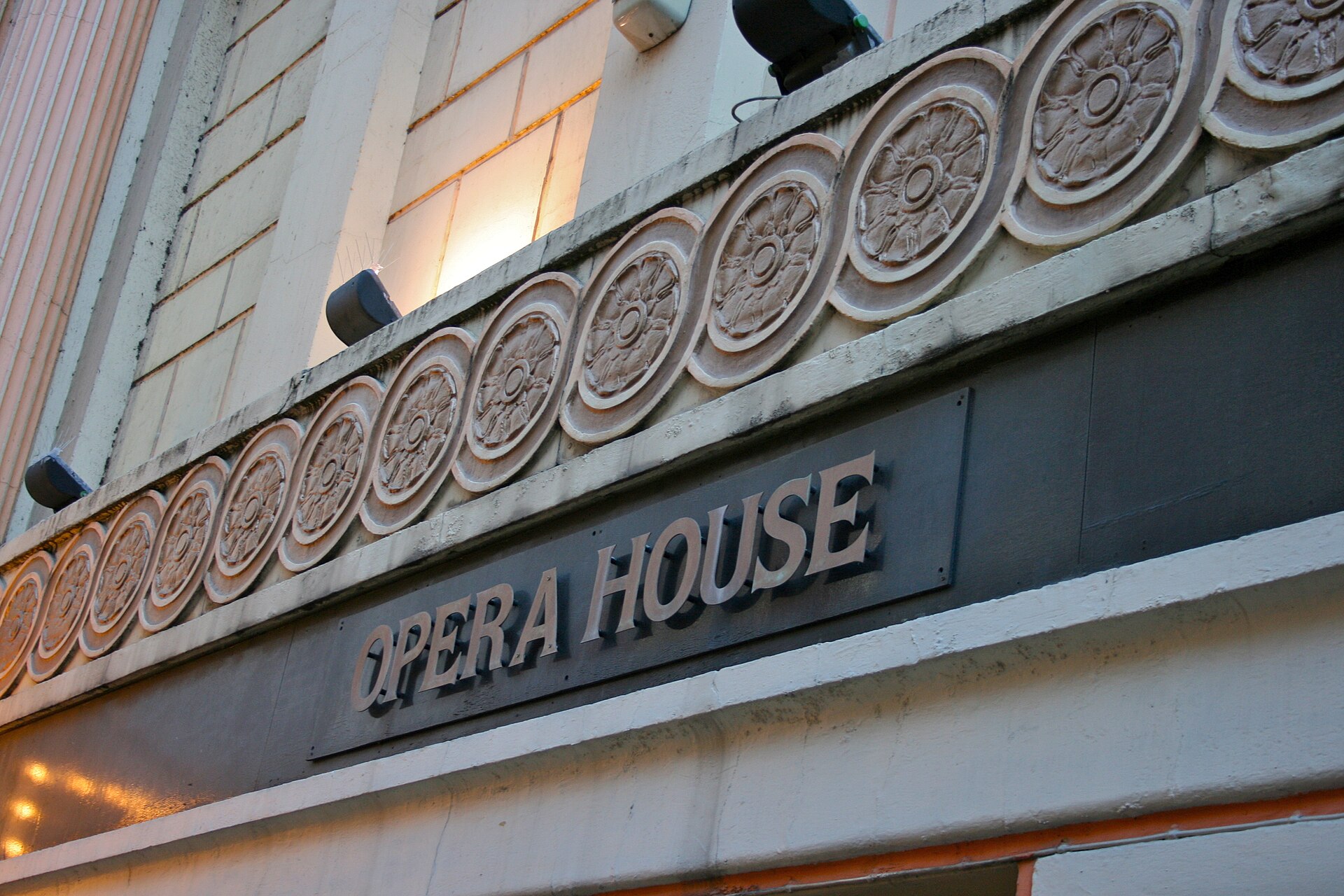
The Opera House Manchester is one of the city's two big touring theatres, standing on Quay Street a short walk from Deansgate and Castlefield. Behind a classical, colonnaded frontage sits a 1,920 seat auditorium with two deep cantilevered balconies, stacked boxes beside the stage and a green and gold colour scheme. Run by ATG Entertainment alongside the nearby Palace Theatre, it is known for large scale touring musicals, ballet, concerts, comedy and a Christmas pantomime, and it has a long record of launching new musicals before they travel on. The building is Grade II listed.
Photos via Google. Attributions: Mike Peel, CC BY-SA 4.0, via Wikimedia Commons
City
Manchester
Capacity
1,920
Current attached shows
44
The Opera House Manchester is one of the city's two big touring theatres, standing on Quay Street a short walk from Deansgate and Castlefield. Behind a classical, colonnaded frontage sits a 1,920 seat auditorium with two deep cantilevered balconies, stacked boxes beside the stage and a green and gold colour scheme. Run by ATG Entertainment alongside the nearby Palace Theatre, it is known for large scale touring musicals, ballet, concerts, comedy and a Christmas pantomime, and it has a long record of launching new musicals before they travel on. The building is Grade II listed.
The theatre opened as the New Theatre on Boxing Day 1912, designed by Richardson and Gill with Farquharson. It was renamed the New Queen's Theatre in 1915, then became the Opera House in 1920 when it passed to John Hart and his associates at United Theatres Ltd.
In 1931 it was bought by Howard and Wyndham Ltd, the company formed at the Theatre Royal, Glasgow in 1895 by Michael Simons. Under managing director A Stewart Cruikshank, and with Charles B Cochrane joining the board and working as a visiting producer, the Opera House premiered numerous musicals and revues and staged the full range of plays, opera and pantomime. It served as a cinema during the Second World War.
The theatre closed in 1979 and spent five years as a bingo hall. The Palace Trust bought it in 1984 and brought it back to life as a theatre, and Apollo Leisure took it on in 1990, filling the stage with large scale musicals. Ambassador Theatre Group acquired it in 2009, and in March 2020 the Opera House gained Charitable Incorporated Organisation status alongside the Palace Theatre. The auditorium was redecorated in March 2011, keeping its familiar green and gold scheme.
Its stage history is unusually rich. The European premiere of West Side Story took place here in 1958, and the British regional premiere of The Phantom of the Opera ran from 1993 to 1995. Gorillaz played their Demon Days Live concert here in 2005, and the theatre has since hosted a string of world premieres including Ghost The Musical, Bat Out of Hell: The Musical, The Band, & Juliet and Back to the Future: The Musical.
Train
Deansgate station is around 0.3 miles from the theatre and Salford Central is around 0.4 miles away. The nearest Metrolink tram stop is Deansgate-Castlefield, also about 0.3 miles away.
Bus
Many bus routes stop close to the theatre in the centre of Manchester. Plan your journey using tfgm.com.
Parking
Q-Park is the official parking partner and offers 15% off when you pre-book online at https://www.q-park.co.uk/en-gb/atg/. For accessible parking there is on-street parking on Byrom Street by the park, though not directly opposite the theatre, and further bays on Lower Byrom Street.
The auditorium is arranged over three levels, with two curved cantilevered balconies that each hold around 500 seats, plus boxes stacked either side of the stage between pairs of fluted Corinthian columns.
General advice for this kind of Edwardian touring house: the balconies overhang deeply, so if you are booking at the back of the stalls for a captioned or heavily staged show, check the seat view first. Seat widths average from 16 to 17 inches.

The Opera House sits in a listed building from 1912, so it is worth planning ahead. There is no lift in the theatre.
The theatre schedules audio described, captioned, BSL interpreted and relaxed performances across the season, with touch tours sometimes offered alongside audio described shows. For audio described performances, book in the centre stalls, which is also where the hearing loop signal works best. For captioned performances, seats in the centre of the stalls are recommended, avoiding limited view seats and seats too far back because of the circle overhang. Seats with the clearest view of the caption units are held back for patrons who need them. Customers wanting a closer view of the stage are advised to look at rows A to C. MobileConnect and the Loop system are available for D/deaf and hard of hearing audiences.
Join the free Access Membership Scheme to book accessible seats online, add an essential companion ticket if eligible and receive news of access performances. The accessibility assistance line is 0333 009 5399, or use Typetalk on 1800 1 0333 009 5399. An audio introduction to the Palace Theatre and Opera House is available on Soundcloud.
Touring

Touring
Aylesbury Waterside Theatre
26 September 2026 to 28 May 2027 (selected dates)
Touring
Manchester Opera House
16 October 2026 to 17 October 2026 (selected dates)

Regional theatre
Manchester Opera House
23 November 2026 to 23 November 2026 (selected dates)

Touring
Manchester Opera House
24 October 2026 to 8 December 2026 (selected dates)

Touring
Touring

Touring

Touring
Manchester Opera House
17 November 2026 to 20 February 2027 (selected dates)

Touring

Regional theatre
Regional theatre
Manchester Opera House
5 December 2026 to 3 January 2027 (selected dates)
Regional theatre
Manchester Opera House
30 December 2026 to 30 December 2026 (selected dates)

Touring
Swansea Building Society Arena
14 March 2027 to 30 April 2027 (selected dates)

Touring

Regional theatre
Manchester Opera House
18 February 2027 to 18 February 2027 (selected dates)

Touring
Touring
Swansea Building Society Arena
12 October 2026 to 16 April 2027 (selected dates)
Touring
The Alexandra Theatre, Birmingham
11 March 2027 to 11 September 2027 (selected dates)

Regional theatre
Manchester Opera House
1 November 2026 to 1 November 2026 (selected dates)

Touring
Manchester Opera House
8 October 2026 to 22 November 2026 (selected dates)
Touring
Manchester Opera House
4 May 2027 to 25 September 2027 (selected dates)

Touring
King's Theatre, Glasgow
18 October 2026 to 19 October 2026 (selected dates)

Touring

Touring

Touring
Theatre Royal Brighton
27 September 2026 to 17 June 2027 (selected dates)

Regional theatre

Touring

Touring
Manchester Opera House
24 February 2027 to 4 March 2027 (selected dates)
Touring
Liverpool Empire Theatre
26 September 2026 to 26 November 2026 (selected dates)

Touring
Princess Theatre, Torquay
4 March 2027 to 27 April 2027 (selected dates)

Touring

Touring
Milton Keynes Theatre
22 September 2026 to 8 May 2027 (selected dates)

Touring
The Alexandra Theatre, Birmingham
30 January 2027 to 13 March 2027 (selected dates)

Touring
Regent Theatre, Stoke-on-Trent
24 September 2026 to 13 June 2027 (selected dates)

Touring
Aylesbury Waterside Theatre
15 February 2027 to 17 July 2027 (selected dates)

Regional theatre
Manchester Opera House
21 March 2027 to 21 March 2027 (selected dates)
Touring

Touring
Regent Theatre, Stoke-on-Trent
11 October 2026 to 1 March 2027 (selected dates)

Touring
The Alexandra Theatre, Birmingham
21 February 2027 to 27 February 2027 (selected dates)

Touring

Touring
New Theatre Oxford
24 September 2026 to 26 September 2027 (selected dates)

Touring

Regional theatre
Manchester Opera House
15 October 2026 to 15 October 2026 (selected dates)
Touring
Milton Keynes Theatre
24 September 2026 to 27 March 2027 (selected dates)

Touring

Touring
Woking Theatre
23 September 2026 to 18 November 2026 (selected dates)

Touring
Leas Cliff Hall, Folkestone
3 October 2026 to 12 November 2026 (selected dates)

Touring
New Theatre Oxford
27 September 2026 to 25 November 2026 (selected dates)

Regional theatre
Manchester Opera House
21 September 2026 to 21 September 2026 (selected dates)

Regional theatre
Manchester Opera House
26 September 2026 to 26 September 2026 (selected dates)
Touring

Regional theatre
Manchester Opera House
1 October 2026 to 1 October 2026 (selected dates)

Touring
The Alexandra Theatre, Birmingham
24 September 2026 to 29 September 2026 (selected dates)

Touring
The Alexandra Theatre, Birmingham
21 September 2026 to 22 September 2026 (selected dates)
Booking and customer service are provided by ATG Tickets. We may earn a commission when you book.
Thu 15 Apr 2027 - Sat 17 Apr 2027
Sold out
View tickets at ATG TicketsSat 24 Oct 2026
On sale
View tickets at ATG TicketsThu 24 Jun 2027 - Sat 26 Jun 2027
On sale
View tickets at ATG TicketsTue 4 May 2027 - Sat 15 May 2027
On sale
View tickets at ATG TicketsTue 2 Mar 2027 - Sat 6 Mar 2027
On sale
View tickets at ATG TicketsMon 5 Apr 2027 - Sat 10 Apr 2027
On sale
View tickets at ATG TicketsFri 26 Mar 2027
On sale
View tickets at ATG TicketsThe theatre programmes large scale touring musicals, ballet and dance, concerts, comedy and talk events, plus a Christmas pantomime. The latest confirmed dates are listed on this page, and tickets are sold through the venue's official box office.
The theatre is at 3 Quay Street, Manchester M3 3HP, in the city centre close to Deansgate and Castlefield. Its sister venue, the Palace Theatre, is on Oxford Street.
Deansgate railway station is about 0.3 miles away and Salford Central about 0.4 miles, while the nearest Metrolink stop is Deansgate-Castlefield at roughly 0.3 miles. Many bus routes stop nearby, and you can plan a journey at tfgm.com.
Q-Park is the theatre's official parking partner and offers 15% off when you book in advance online. For accessible parking there are on-street bays on Byrom Street by the park and on Lower Byrom Street.
The auditorium seats 1,920 across the stalls and two cantilevered balconies, with boxes either side of the stage. Each balcony holds around 500 seats.
There is no lift in the building, with 28 steps from the foyer to the stalls and at least 78 steps to the gallery, but there are two wheelchair spaces with companion seats in the Circle that are reached from street level. Accessible toilets and the Beecham Bar are on street level, and the accessibility assistance line is 0333 009 5399.
Yes. Audio described, captioned, BSL interpreted and relaxed performances are scheduled through the season, with touch tours sometimes offered alongside audio described shows. Centre stalls seats are recommended for audio described and captioned performances.
It opened as the New Theatre on Boxing Day 1912, was renamed the New Queen's Theatre in 1915 and became the Opera House in 1920. After a spell as a cinema in wartime and five years as a bingo hall from 1979, it reopened as a theatre in 1984 and is now Grade II listed.
Manchester Opera House hosts a rolling programme of touring productions. The current what's-on list with dates, last checked 2026-09-21, is further up this page, and tickets are sold through the venue's official box office.
Manchester Opera House is located at 3 Quay St, Manchester M3 3HP.
Manchester Opera House has a capacity of 1,920 — small enough to feel intimate but large enough to host major productions.
News
First look footage from the Mean Girls UK tour has arrived, with the musical now playing at Manchester Opera House before touring the country through January…
Susan Novak
News & Reviews
Casting
David Hunter and Grace Mouat join the cast of 13 Going on 30 – The Musical, which will make its world premiere at the Manchester Opera House this September.
Julia Jordan
News & Reviews
News
The eagerly awaited 13 Going on 30 - The Musical is set to premiere at Manchester Opera House in September 2025, promising a nostalgic yet fresh take on the …
Susan Novak
News & Reviews
News
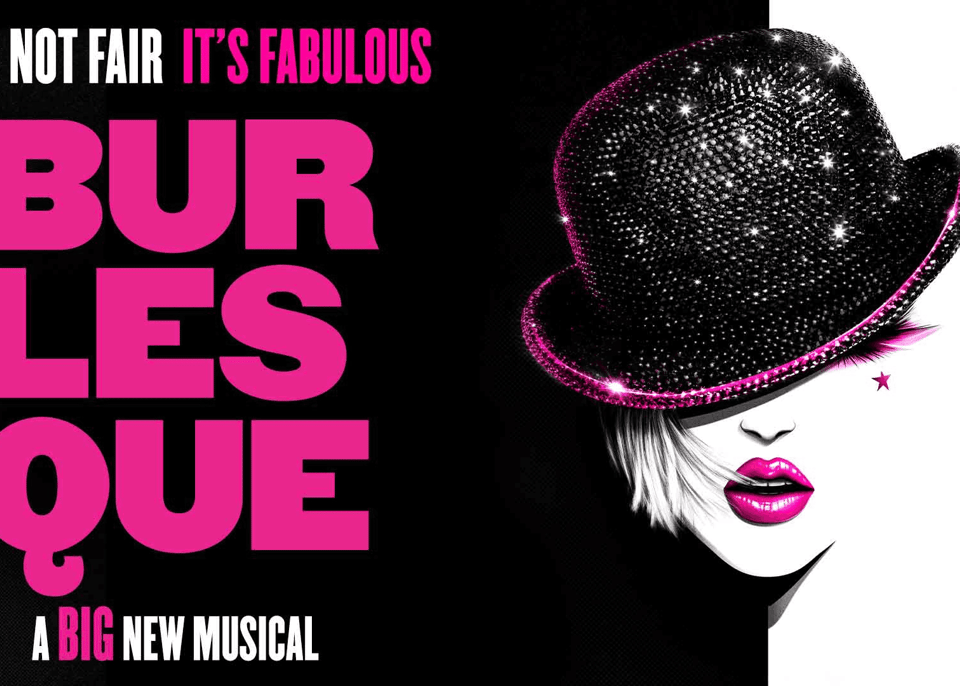
The first-ever stage adaptation of Burlesque the Musical to premiere at Manchester Opera House in June 2024.

Douglas Mayo
News & Reviews
News
Award-winning musical & Juliet UK Tour announced to commence on 8 July 2024 at Manchester Opera House.
Douglas Mayo
News & Reviews
News
I Should Be So Lucky the musical will feature the music of Stock, Aitken and Waterman starting at Manchester Opera House in November 2023.
Douglas Mayo
News & Reviews