The National Theatre on the South Bank is one of the most significant theatre buildings in Britain, and one of the few venues that operates at both the scale and the ambition that its role as the national producing house implies. Unlike the commercial West End theatres that cluster around Shaftesbury Avenue and the Strand, the National Theatre is a publicly subsidised institution whose stated purpose is to make excellent theatre accessible to as wide an audience as possible. The building, designed by Denys Lasdun and opened in stages between 1976 and 1977, houses three separate performance spaces of distinct character and configuration. This guide covers the history of the institution, each of its three auditoriums, how to choose seats, and the practical information visitors need before arriving.
The National Theatre was founded in 1963, with Laurence Olivier as its first artistic director, initially operating out of the Old Vic Theatre in Lambeth while its permanent home on the South Bank was under construction. The company at the Old Vic quickly established a reputation for productions of exceptional quality and ambition, bringing together some of the most significant performers and directors in British theatre under a single producing organisation.
The move to the South Bank building, designed by Denys Lasdun in a Brutalist style that was controversial at the time and remains a subject of strong opinions, gave the National Theatre the physical resources to pursue its ambitions on a scale the Old Vic could not support. The building's three auditoriums allow the National to programme different kinds of work simultaneously: large-scale productions in the Olivier, mid-scale work in the Lyttelton, and intimate or experimental work in the Dorfman.
The National Theatre's subsequent history is one of the richest in British theatre, encompassing numerous productions that transferred to the West End, to Broadway and to international touring. Work originating at the National has defined the shape of British theatre across the decades since the building opened, and the institution's dual role as producing house and venue continues to make it central to the theatrical life of London.
The National Theatre building contains three separate performance spaces: the Olivier, the Lyttelton and the Dorfman. Each has a distinct character, configuration and seating capacity, and they programme different kinds of work in ways that reflect those differences.
The Olivier Theatre is the largest of the National's three spaces, with a capacity of approximately 1,150 seats in an open, fan-shaped configuration. The auditorium draws on the design of classical Greek theatres: the stage is a large open platform that extends into the audience space, with seating arranged in a fan pattern around three sides of the playing area. There is no proscenium arch, and the relationship between performer and audience is correspondingly close: the configuration emphasises the live, shared event of performance rather than the picture-frame illusion of the proscenium stage.
The Olivier's open configuration suits large-scale work with significant movement and ensemble content. Productions staged here use the entire stage architecture, including the drum revolve that allows sections of the stage floor to rotate, and the full height of the fly tower above the stage. The scale of the space is considerable, but the fan-shaped layout means that even distant seats are not dramatically far from the stage, as the audience wraps around it rather than sitting in a straight line opposite it.
For the best seats in the Olivier, the central areas of the Stalls from approximately row E to row P provide the most satisfying combination of proximity and overview. The Circles above the Stalls offer an elevated view that many audiences prefer for productions with significant staging across the full stage width. Side seats in the upper circles can involve significant angles.
The Lyttelton Theatre is a conventional proscenium theatre with a capacity of approximately 890 seats across three levels: Stalls, Dress Circle and Upper Circle. The configuration is traditional: a rectangular auditorium facing a proscenium-framed stage, with a well-equipped technical infrastructure that supports the full range of scenic and lighting possibilities.
The Lyttelton is the National Theatre's home for mid-scale productions, ranging from straight drama with single-set staging to larger productions that make full use of the stage's depth and flying capacity. The proscenium configuration suits more intimate dramatic work than the Olivier, and the scale of the auditorium allows for a more conventional relationship between the audience and the performance.
For seating in the Lyttelton, the mid-Stalls central block from approximately row D to row L is the strongest area in terms of proximity and clear sightlines. The front central rows of the Dress Circle provide the elevated overview that is useful for productions with significant staging across the stage's full width. The Upper Circle is not remote at this scale and provides adequate acoustic quality and clear central sightlines at reduced prices.
The Dorfman Theatre is the smallest of the National's three spaces, with a capacity of approximately 400 seats in a flexible configuration. The space can be reconfigured for different productions, allowing the relationship between stage and audience to be changed depending on the requirements of the work. End-on, traverse and other configurations are possible, making the Dorfman suitable for experimental, site-responsive or studio-scale work that benefits from the flexibility the space allows.
The Dorfman programmes new writing, experimental productions and work by early-career artists alongside more established companies and directors. For audiences interested in seeing work at the development edge of British theatre rather than established large-scale productions, the Dorfman is the space within the National Theatre building most likely to provide that experience.
Beyond the three auditoriums, the National Theatre building contains a significant amount of publicly accessible space. The foyers and terraces of the South Bank building are open to visitors outside performance hours, providing a public cultural space that functions quite differently from the commercial theatres of the West End. The building includes restaurant and bar facilities, an exhibition space that typically displays material related to current productions, and views of the Thames from the riverside terraces.
The National Theatre's bookshop and associated spaces make the building a destination in its own right for audiences with broader interests in British theatrical history and culture. The building hosts free performances and events in the foyer spaces throughout the year, making it accessible to audiences who may not be booking for a main stage production.
The National Theatre is located on the South Bank, with the principal entrance on Upper Ground, Lambeth. The nearest Underground station is Waterloo (Bakerloo, Jubilee, Northern and Waterloo and City lines), approximately ten to twelve minutes on foot along the South Bank riverside walkway. Southwark station (Jubilee line) is an alternative, approximately eight minutes on foot through the Coin Street neighbourhood.
The building's riverside location places it in close proximity to other South Bank cultural institutions, including the Royal Festival Hall, the Hayward Gallery and the Tate Modern. For visitors with time before a performance, the South Bank cultural corridor is a distinctive and rewarding environment to explore.
The National Theatre's position outside the Theatreland cluster means that pre-theatre dining options differ from those available near Shaftesbury Avenue or the Strand. The Waterloo and Lambeth areas have a range of restaurants and cafes, and the National Theatre itself provides catering within the building.
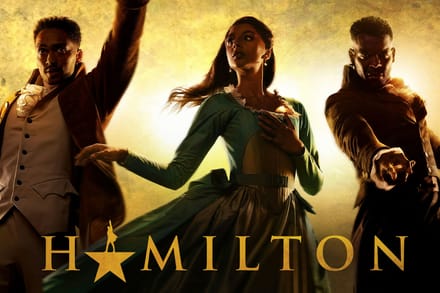
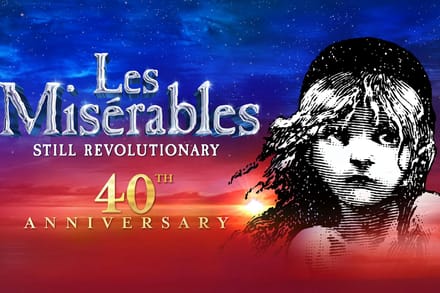
For tickets to productions at the National Theatre and across the West End, tickadoo provides full seat availability with interactive seat maps and pricing. Alongside the National Theatre, the West End programme includes major long-running productions including Hamilton, Hadestown and Les Misérables. For the complete current programme across all London venues, BritishTheatre.com lists all productions with full booking details. tickadoo also offers theatre gift vouchers.
What is the National Theatre in London? The National Theatre is a publicly subsidised producing house on the South Bank with three separate auditoriums: the Olivier, the Lyttelton and the Dorfman. It is one of the most significant theatre institutions in Britain, responsible for a wide range of productions across its history.
How many theatres does the National Theatre building have? The National Theatre building contains three performance spaces: the Olivier Theatre (approximately 1,150 seats, open stage), the Lyttelton Theatre (approximately 890 seats, proscenium), and the Dorfman Theatre (approximately 400 seats, flexible configuration).
Where is the National Theatre? The National Theatre is on the South Bank in London, near Waterloo Station. The nearest Underground stations are Waterloo (Bakerloo, Jubilee, Northern and Waterloo and City lines) and Southwark (Jubilee line).
What are the best seats at the National Theatre? The answer depends on which auditorium you are attending. In the Olivier, the central Stalls area from rows E to P and the central circle seats provide a strong view. In the Lyttelton, the mid-Stalls central block and the front central rows of the Dress Circle are the most valued positions.
Is the National Theatre connected to the West End? The National Theatre is an independent institution that is not part of the commercial West End circuit, though productions originating at the National regularly transfer to West End theatres. The building is located on the South Bank rather than in the Theatreland district but is a central part of London's theatrical landscape.
Stay in the spotlight
Get the latest theatre news, reviews and exclusive offers straight to your inbox.