The Boy Who Harnessed the Wind, the RSC-produced musical now playing at @sohoplace, is a production brimming with purpose, joy and hope. It brings a remarkable true story of resilience to the London stage, and has quickly become one of the most talked-about new musicals in town. There are few things more rewarding in theatre than watching an audience of children completely transfixed by the story unfolding in front of them, and this is a show built to do exactly that.
The production marks a musical debut for its director, Lynette Linton, one of the most exciting directorial voices working in British theatre today. It is a bold and, by her own admission, daunting step for someone best known for unflinching dramas. But as she explains, this particular story left no room for hesitation.
A True Story Brought to Life on Stage
The Boy Who Harnessed the Wind tells the remarkable true story of William Kamkwamba, a Malawian teenager who, in the face of devastating famine, used his resourcefulness and scientific curiosity to build a wind turbine that helped save his village. Kamkwamba co-authored a bestselling memoir about his experience, and in 2019, Chiwetel Ejiofor directed a well-received film adaptation.
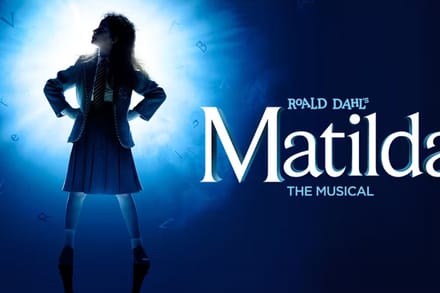
Now, a new musical adaptation by Tim Sutton and Richy Hughes brings the tale to the London stage with vibrant African rhythms, dynamic choreography, inventive puppetry and an overwhelming sense of hope. Produced by the RSC, the company behind some of the West End's most enduring musical exports, the show sits in a proud lineage. The RSC previously nurtured Les Misérables and Matilda The Musical from stage premieres into global phenomena.
For Linton, the appeal was immediate and deeply personal. "I just knew this was a story which would inspire Black children, so I wanted to do it," she says. In a theatrical landscape where representation remains an ongoing conversation, that clarity of intent is striking. The production does not simply retell Kamkwamba's story; it offers young audiences, particularly those from Black and African diaspora backgrounds, a hero who looks like them on a major London stage.
From the Bush to the West End and Beyond
Linton's career trajectory has been nothing short of remarkable. Raised in Leytonstone, she was not a child of the theatre world. She first encountered live performance through the Theatre Royal Stratford East, initially drawn in by an interest in writing rather than directing. That encounter proved transformative.
Her tenure as artistic director of the Bush Theatre, alongside associate artistic director Daniel Bailey, reshaped the venue into one of London's most vital homes for new writing. Under their stewardship, the Bush premiered a string of acclaimed productions, including High Table, Red Pitch and Shifters, many of them by Black and Asian writers who had not previously found a home on London's major stages. The Bush became synonymous with a kind of effortless disruption: brilliant new voices reshaping what British theatre could look and sound like.
Before and after the Bush, Linton built an impressive portfolio at venues including the National Theatre, where she directed Lynn Nottage's Sweat, Blues for an Alabama Sky and Intimate Apparel. Her staging of Sweat, originally commissioned by Josie Rourke at the Donmar Warehouse, was widely praised as an urgent, expansive piece of storytelling that captured the anger and despair behind the political upheavals of 2016. That production transferred to the West End and confirmed Linton as a major directorial talent.
When we spoke, she was about to fly to New York to remount Shifters, Benedict Lombe's play which she first staged at the Bush in 2024 and which subsequently transferred to the West End. It is yet another indication of the international demand for her work.
Making the Leap Into Musicals
Despite her formidable track record in dramatic theatre, Linton is a self-confessed musical devotee. She loves the form passionately, citing everything from Chicago to Hamilton among her favourites. Perhaps most surprisingly, she has said she would relish the chance to direct High School Musical for the stage.
Taking on The Boy Who Harnessed the Wind was, she acknowledges, a significant leap. "It was daunting because I'd never done it before, and I'm a very text- and character-led director, so a musical felt like quite a leap," she explains. "But I wasn't alone. I had a team of amazing human beings and creatives and a cast who really wanted to collaborate, so I just dove in."
Her approach was characteristically fearless. "Sometimes when you are directing, you just have to jump in the water and start swimming, so that's what I did." She adds, with characteristic humour, that in real life she cannot actually swim. That willingness to plunge into unfamiliar territory, trusting her instincts and her collaborators, has been a hallmark of her career from the very beginning.
Why Representation on Stage Still Matters
At the heart of Linton's decision to direct The Boy Who Harnessed the Wind lies a conviction about the power of theatrical representation. When she considers whether to take on a project, she asks herself a series of questions: Why am I doing this? What is it for? How do I relate to it artistically? And why do I want to tell this story?
For this production, the answer came instantly. The opportunity to put a story rooted in African experience, centred on a young Black hero, on a prominent London stage was something she could not pass up. The result is a show that, by all accounts, resonates deeply with its audience, and particularly with the young people watching from the stalls.
British theatre has made genuine strides in diversifying its stages in recent years, but Linton's work is a reminder that progress depends on talented individuals making deliberate, purposeful choices. Her Bush Theatre years proved that audiences are hungry for stories from a wider range of voices. Productions like The Boy Who Harnessed the Wind continue that work on an even larger platform.
What Comes Next
Currently operating as a freelance director, Linton says she loves the freedom the role affords her. However, she does not rule out leading another theatre in the future. "You catch me at a moment when I am thinking hard about my next steps," she says. Rumour has long suggested she was in the frame for the National Theatre's top job, and while that particular appointment went elsewhere, few doubt that a leadership role of that magnitude lies in her future.
After returning from New York with Shifters, she plans a well-earned break, though she has several projects and collaborations in the pipeline. Whatever she does next, whether it is another searing drama, a big-budget musical, or indeed a return to institutional leadership, it will be worth watching.
Should You Book The Boy Who Harnessed the Wind?
If you are looking for a family-friendly musical that combines a genuinely uplifting true story with stunning stagecraft, The Boy Who Harnessed the Wind deserves a place at the top of your list. It is a show that works for audiences of all ages but holds particular magic for young theatregoers, especially those who rarely see themselves reflected in West End stories. With the RSC's production pedigree and Lynette Linton's directorial vision behind it, this is one of the most exciting new musicals in London right now.
Browse our full selection of musicals in London, explore new shows opening soon, or see all available shows on BritishTheatre.com.
Susan Novak has a lifelong passion for theatre. With a degree in English, she brings a deep appreciation for storytelling and drama to her writing. She also loves reading and poetry. When not attending shows, Susan enjoys exploring new work and sharing her enthusiasm for the performing arts, aiming to inspire others to experience the magic of theatre.
View profile and all articlesStay in the spotlight
Get the latest theatre news, reviews and exclusive offers straight to your inbox.