(Photo: Annabel Vere). Nic Kyle and Alastair Brookshaw The Grand Tour
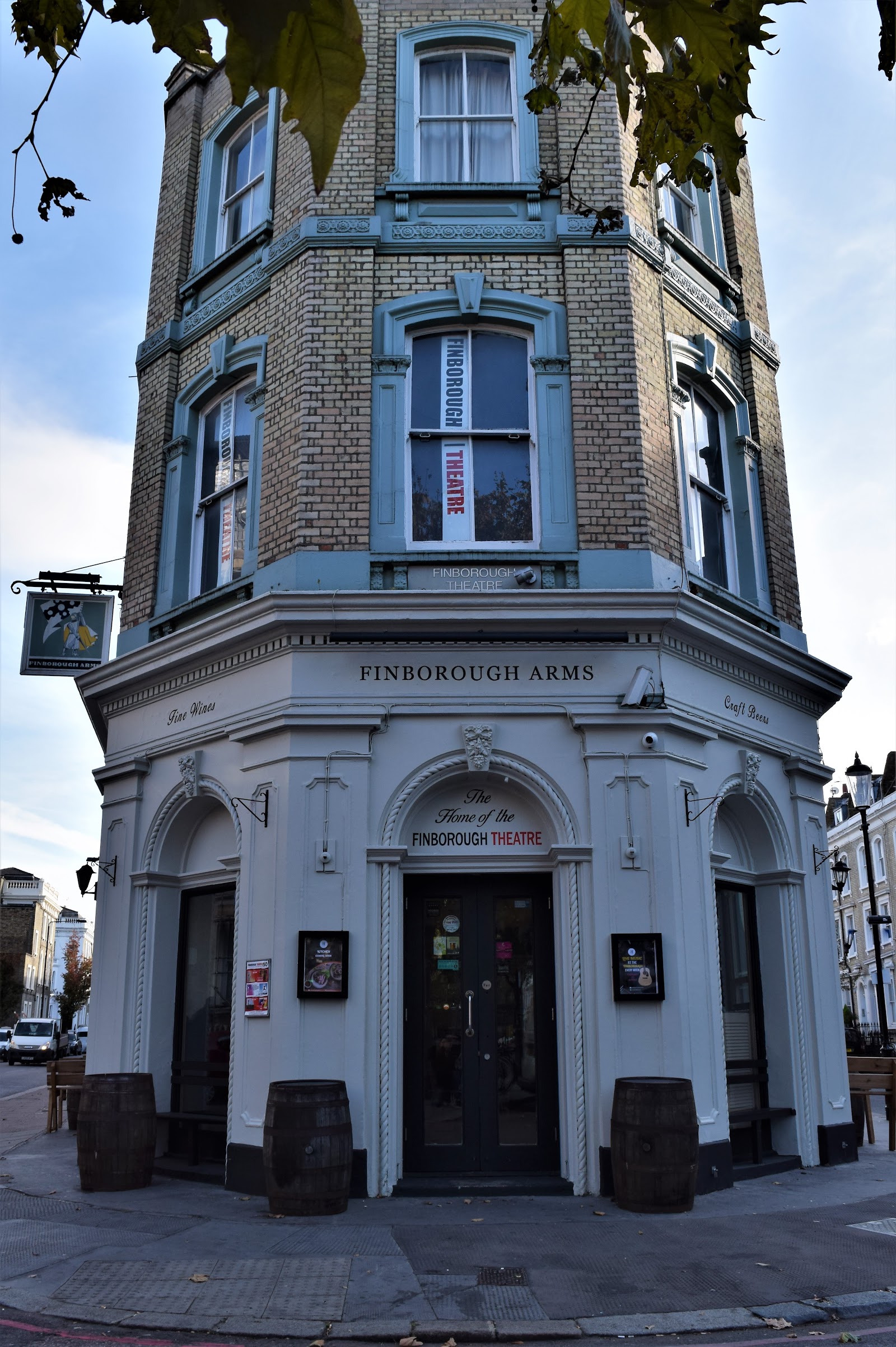
Finborough Theatre
14 February 2015
5 Stars
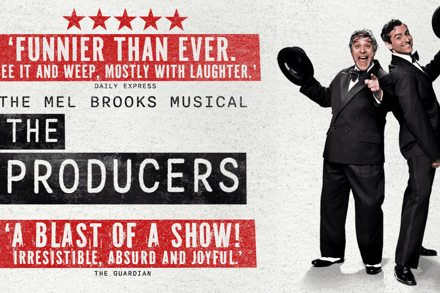
What is it about the combination of Nuns and Nazis that appealed to the great Broadway composers, Richard Rodgers and Jerry Herman? White habits against black uniforms? Good against evil? Disciplined women confounding disciplined men? Whatever the reason, it has been a popular choice, with The Sound of Music being the vehicle for the greatest exposure of the combination. Mel Brooks features Nuns and Nazis in The Producers, and there are bound to be other occasions where Mother Superior and Aryan Supremacist co-exist.
Very rarely when one attends the theatre to see a Broadway Musical is the absence of clapping at any time during the first Act a good sign. Audiences love to hoot and holler their approval for song or singer, sometimes before the last note has sounded. So silence from an audience often indicates disapproval, boredom or disdain. Only very very rarely is such a silence born out of an audience's desire not to break the spell, not to miss a moment, not to bring the performance to a close. Especially when the story involves Nuns or Nazis or both.
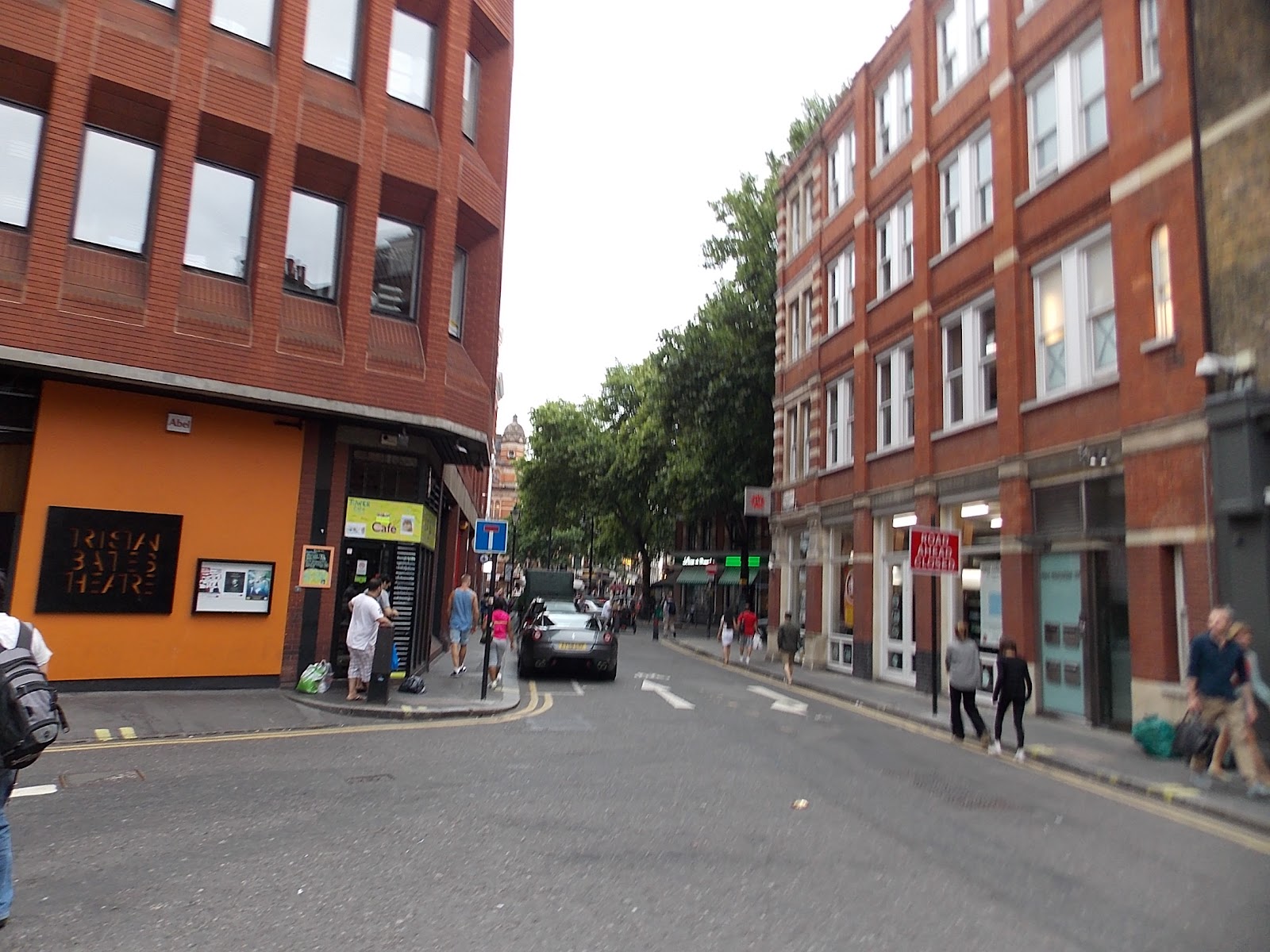
But that is precisely what happens in Thom Southerland's exceptional European premiere of The Grand Tour, a 1979 collaboration between Jerry Herman (Music and Lyrics) and Michael Stewart and Mark Bramble (Book). From the moment Alastair Brookshaw's astonishing S.L. Jacobowsky, alone on stage, starts the narrative running, the audience is hooked, completely aware that Southerland has created something quite remarkable in the tiny Finborough Theatre space, and absolutely determined not to interrupt a second of it.
Quite right too.
The original Broadway production was considered a flop and ran for less than three months. Watching Southerland's intimate, charming and perfectly pitched production, it is difficult to understand why that is the case. The Grand Tour proves to be melodious, riveting and life-affirming - gorgeous in every way.
In great part, this is because Southerland and his team have fashioned the production to fit the Finborough space. Intimacy, simplicity is the key here. Musical director Joanna Cichonska provides orchestrations for two keyboards and vocal arrangements which work beautifully for the small cast. Phil Lindley's set design is fabulously cartoonesque, creating a clear sense of allegorical simplicity: a naively drawn map of Europe is the main backdrop, and hidden in it are flaps, flats and doors which open to create various locations, reveal other spaces; pull-up flats, hidden on the floor, create other effects including a car. It all works easily and remarkably effectively.
From the mid-17th century, for about 200 or so years, it was a regular rite of passage for the educated elite to undertake a long excursion into Europe to widen horizons, to soak up culture (especially, art) in the great romantic cities. This was known as the Grand Tour. The use of that title for this musical is not coincidental. For the story is chiefly about a trip through parts of Europe whereby two men discover things about themselves and each other, becoming better people as a result.
It's 1940 and the Germans are about to take possession of France. Jacobowsky, an intellectual Jew from a small town in Poland, is about to migrate, yet again, to avoid the oncoming Nazi nightmare, as he has been doing for years. In desperation, he buys a car even though he cannot drive. His unflagging internal optimism spurs him to action; something will work out - while there is life there is possibility and hope.
In this case, the something is Colonel Stjerbinsky, a Polish toff also from the same town as Jacobowsky, but a snob and an anti-Semite. Stjerbinsky has a top-level secret mission (he has to deliver a list of names of Polish resistance fighters to England) but no means of getting out of Paris. Jacobowsky overhears his dilemma and offers his car. After some initial difficulty, the two set off together, uneasy and fearful. Then Jacobowsky is stunned to learn that they are not heading directly for the border. Instead, Stjerbinsky wants to go and collect his sweetheart, Marianne, to ensure her safety.
And so the adventures begin. Tense document-checking on trains, desperate bravado in a circus, the ruthless actions of a determined Nazi who is tracking them, a Jewish couple desperate to marry and celebrate, a fatal confrontation in a convent, and the race to get to the boat to England on time (with the important papers). It sounds twee, and it is, but that is part of why it is so beguiling. If you don't know the story, it is gripping.
Of course, the story itself is not the key to enjoying either the show or this production. It's the characters and their reactions to the situations, and the lessons to be learnt from the situations, which provide the fascination and insight here. Plain, undiluted horror is put in contrapuntal contrast to high farce or improbable co-incidence. Love in many forms - romantic, platonic, familial, patriotic - is in sharp focus, as is hope and hatred.
The Grand Tour is a fable, a fairytale even - and when seen in that light, as Southerland so clearly sees it, it is rich with possibility. It's not a history lesson or a dramatic story; but it is no less worthwhile for that. As Jerry Herman said: "The Grand Tour is about the indomitability of the human spirit, so it was a perfect piece for me."
Herman provided the piece with a rich, tuneful score that contains a perfect love song (Marianne), rousing ensemble pieces (One Extraordinary Thing; Wedding Conversation), reflective solos (I'll Be Here Tomorrow; I Think, I Think) and a trio about friendship that is bursting with brio and joy (You I Like). There are preshadowings of La Cage Aux Folles in the score, as well as some echoes of Mack and Mabel, neither of which is a bad thing. Like all Herman scores, it needs to be properly sung and with real heart, and when it is, the effect is astonishing and charming in equal measure.
Southerland does not make the mistake so many make in presenting musicals these days: he casts singers who can act and dance, rather than actors, or personalities, who have limited abilities, particularly in the music side of the equation. He does not rely upon the artist's fan base or popularity; he casts them for their actual ability. And that makes a real difference.
Brookshaw is simply remarkable as the genial Jew, Jacobowsky, who is eternally looking for a place that will accept him and which he can make home. Subtle and deft, Brookshaw embodies the pain, isolation and eternal optimism of this particular wandering Jew. There is a remarkable genuineness about every aspect of what Brookshaw does - the scene where he realises he is in love with Marianne and the scene where he realises she will never love him in that romantic way are both beautifully, touchingly, performed, with great honesty.
His singing is exemplary in every respect, but his reprise of Marianne particularly glorious. The sense of infectious wonder and joy with which he imbues every moment is quite marvellous to behold, whether he is attempting a high-wire tightrope walk or facing up to the persistent Nazi. The final scene is both heart-breaking and volcanic with the power of hope.
Equally exemplary, and in a much harder role, is Nic Kyle, who manages to make the rigid, morally blind Stjerbinsky both real and understandable. It is his character who most obviously takes the Grand Tour and the person who finishes that tour (to say quite how he finishes it would be to spoil the show's great twist) is a much better, nicer and compassionate person than the one who started it. Kyle clearly shows the transition, in a clear, carefully thought through and deeply convincing way.
He has a magical voice, especially in the upper registers where his high tenor is gentle, beautifully modulated and unerringly accurate. The beauty of his voice demonstrates, almost from the outset, that Stjerbinsky should be a better person than he appears to be; Herman knew what he was doing. Kyle shows the buffoonery, the bravery, the belligerence and the blissful aspects of the character: a hard candy soldier with a soft centre. His delivery of You, I Like, particularly, is thrilling.
Together, Brookshaw and Kyle are an unbeatable double act.
As Marianne, the patriotic woman both men adore, Zoë Doano is sheer delight. She brings a splendid sense of the 40s to her portrayal as well as radiant warmth. Her voice is sweet and effortless, and she gives Herman's score full value. Her delivery of I Belong Here is perfectly judged.
Wisely, Blair Roberston opts for the Ralph Fiennes approach to playing ruthless, murderous Nazi villains: his SS Captain is all perfect, cut-glass, pronunciation and silky steel determination. His brutal murder of the fur-coat wearing Jewish woman he chances upon on a train was all the more shocking given his rakish charm. Very much a case of less is more.
There is excellent work from Vincent Pirillo (superb voice) as Papa Clairon, the father of the bridge whose wedding ritual is interrupted by the SS Captain's relentless pursuit of Stjerbinsky; from Samuel J Weir as the hapless groom; from Elizabeth Graham as Mme Clairon and Mother Pauline and Michael Cotton as the Undercover Agent who offers salvation. Indeed, the ensemble is generally very effective and the big set pieces work especially well.
The scene at the circus, the wedding and in the convent are full of vitality and exuberance. Cressida Carré's choreography is perfect for the space and the cast execute it with style and vigour. The full effect of One Extraordinary Thing at the end of Act One is remarkable.
Vocally, there is nothing to complain about here. Cichonska's musical direction is clear and ensures that every note, every harmony, every melody is given full measure. The ensemble singing is glorious, bright, full, and completely in-tune. Just delightful to listen to. It's all acoustic too, which makes it the more impressive. Cichonska and Chris Guard accompany the cast on two keyboards, providing perfect, polished support.
This is a terrific production of a musical which has been oddly neglected. Everyone is perfectly suited to the roles in which they are cast and the two male leads are tremendous in every way. Jerry Herman may have written I Promise You A Happy Ending for Mack and Mabel, but this production of The Grand Tour truly delivers on that promise.
If you can put aside your 21st century cynicism and embrace a fable about hope and joy, this production is unmissable. If you can't put aside your 21st cynicism, this production should be compulsory.
An absolute, unqualified, treat.
Stephen Collins is a contributor at British Theatre, covering West End productions, London theatre news, casting updates, and UK stage trends.
View profile and all articlesStay in the spotlight
Get the latest theatre news, reviews and exclusive offers straight to your inbox.