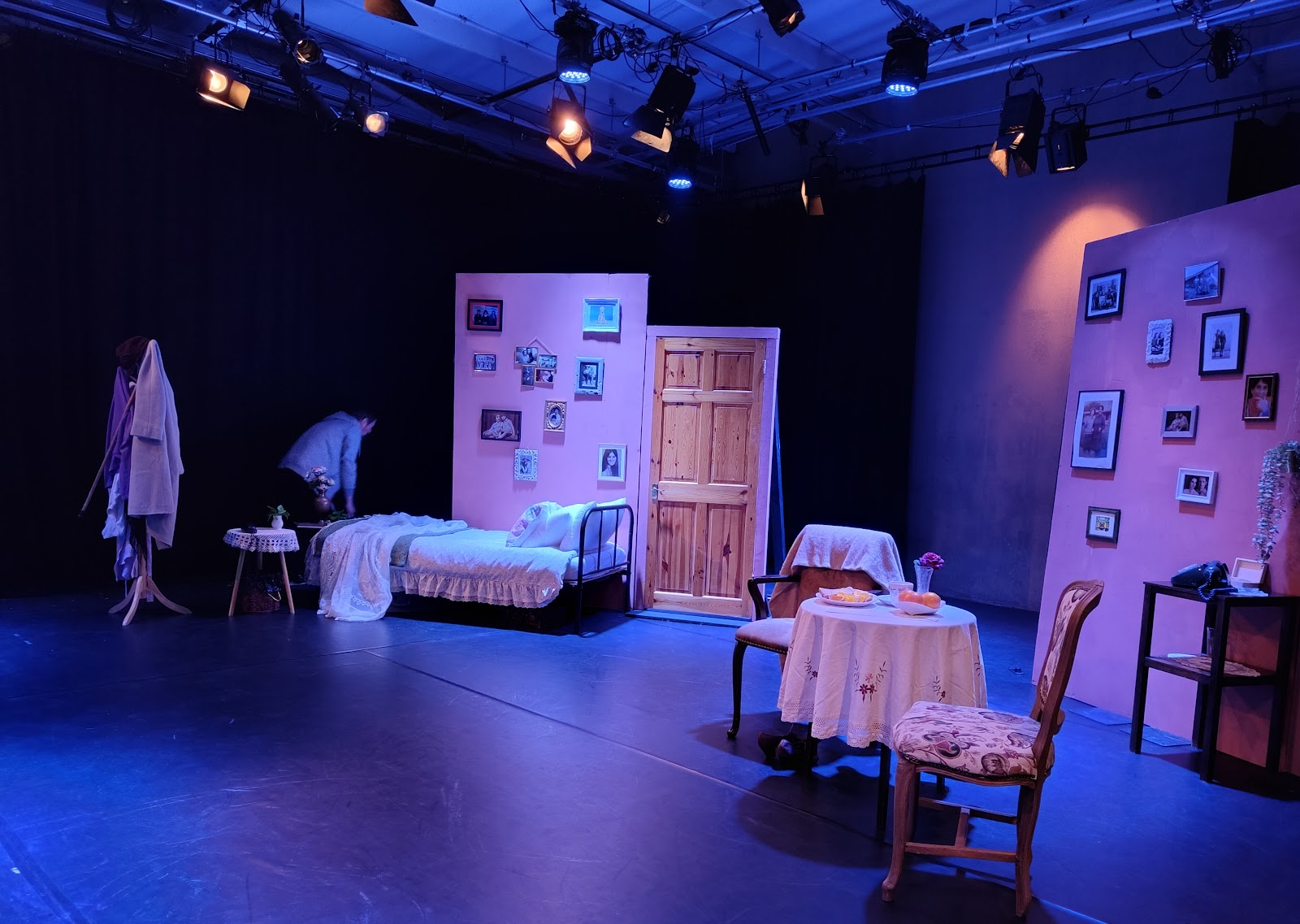
There is something thrilling about watching a forgotten play come roaring back to life, and that is precisely what is happening at Jermyn Street Theatre with Wife to James Whelan. Written by the largely overlooked Irish playwright Teresa Deevy, this 1930s drama is being given a vivid, emotionally layered revival by Jonathan Bank's Mint Theater company. Running until 25 July, it is a production that rewards curiosity: audiences expecting a familiar tale of wifely domesticity will instead find a sharp, youthful play about ambition, romantic possibility, and the devastating consequences of choices made and deferred.
A Nearly Lost Playwright Returns to the Stage
Teresa Deevy was once a significant voice in Irish theatre, yet her work has largely faded from the repertoire. That makes this revival all the more welcome. Wife to James Whelan is not, as its title might suggest, a story about a woman defined by her husband. In fact, for almost the entire play, the dashing Fiach Kunz as James Whelan has married nobody at all. Instead, Deevy's script is a keenly observed portrait of a small Irish town, its gossip, its rivalries, and the complex emotional currents that flow between a tight-knit group of friends over the course of several years.
Jonathan Bank has already proven his eye for unearthing gems from the past at this venue: his recent revival of Miles Malleson's Yours Unfaithfully was an arresting rediscovery. With Wife to James Whelan, Bank demonstrates that the Mint Theater's mission to champion neglected plays translates beautifully to London's intimate off-West End spaces.
The Story: Ambition, Love and the Passage of Time
The play opens with a deceptively breezy first-act scene. We meet the affable Tom (Patrick McBrearty) and Bill McGafferty (Darragh Feehely) as they josh with the pretty Nan Bowers (Cliona Flynn). Through their easy, gossipy conversation, we get a vivid sense of the town and its hierarchies: Bill is heading off to a new job, while everyone is impressed that Whelan has landed a coveted position in Dublin, beating out several local rivals. When Whelan himself appears, he is cocky and confident, seemingly certain that Nan will wait for him. But Nan has her eye on another lad, Jack. In the background stands the sensible, less glamorous Kate (Eavan Gaffney), everyone's friend, quietly devoted and dependable.
It is a cosy opening, carefully laying out the natures and dynamics of the group. But the real drama arrives after the interval, when seven years have passed. We are now in the office of Whelan's "Silver Wings Motor Services". Tom is one of his drivers. Will, Nan's little brother (played with a touch of camp absurdity by David Rawle), has grown into a proud young man working in the front office. Kate drifts in and out, more assured than before, while a new arrival, the posher and pushier Nora, makes it clear she wants to become the wife to James Whelan.
But Whelan is oddly awkward with Nora's advances, telling her she is "showing yourself in that cheap way" and confiding, "I never speak long with Nora than I feel myself disappointed." Deevy's language is beautiful: economical yet revealing, with the cadence of real speech elevated by poetic precision.
Fine Ensemble Acting and the Weight of Years
One of the production's greatest achievements is its handling of time's passage. Through small, intelligent touches and superb acting, the entire ensemble conveys the weight of seven years. Nan returns to the office in a black shawl, widowed and with a child, seeking work. She is tired and beaten. Whelan has grown tougher and harder. Tom has become more perceptive. Yet old slights and old loves persist: as Whelan observes, Nan still has "the same soft look she always had."
The emotional undercurrents are beautifully, gently achieved. When Whelan snaps, "Nothing torments me. I'm perfectly happy," your belief is complete, precisely because everything about his manner suggests the opposite. Similarly, when Will suddenly rises up to challenge his boss over his behaviour, the moment lands with force because the groundwork has been meticulously laid.
Fiach Kunz anchors the production with a Whelan who is charismatic but increasingly hard to read. Cliona Flynn brings genuine pathos to Nan's return, while Eavan Gaffney's Kate is a model of understated feeling. Patrick McBrearty's Tom is a quiet revelation: his sharp understanding is drawn in just a few beautifully observed moments. And David Rawle finds both comedy and real feeling in the role of Will, whose youthful bravado masks a fierce loyalty.
A Dramatic Masterstroke That Changes Everything
For much of the play, the emotional trajectory seems sentimentally clear. We think we know what will happen, and what should happen, between these still-young people. But Deevy is a more daring playwright than that. She delivers one extraordinary dramatic moment that capsizes everything we have anticipated. It is a twist that feels both surprising and inevitable, the hallmark of genuinely accomplished dramatic writing.
When another six months have passed before the final scene, the resolution leaves you doing exactly what the best plays always make you do: reflecting, with some worry, on the afterlives of the characters. What happens next? Are they happy? The play refuses to tell you, and it is all the more powerful for that refusal.
Why This Revival Matters
Teresa Deevy's marginalisation from the Irish and British theatrical canon is one of those quiet injustices that revivals like this can begin to correct. Her writing has the emotional intelligence of Chekhov, the social acuity of Sean O'Casey, and a voice that is entirely her own. That a female Irish playwright of the 1930s could write with such sophistication about ambition, desire, and the compromises of everyday life is a reminder that the history of theatre is full of buried treasures.
Jonathan Bank and the Mint Theater company deserve enormous credit for bringing this work back. The intimate setting of Jermyn Street Theatre is perfectly suited to Deevy's domestic scale: these are characters you feel you could reach out and touch, and the emotional stakes, though never melodramatic, feel quietly enormous.
Should You Book?
Wife to James Whelan is a rewarding, thought-provoking evening of theatre, ideal for anyone who loves finely crafted drama and is curious about voices from the past that deserve to be heard again. The ensemble acting is uniformly strong, the writing is beautiful, and the final dramatic twist will stay with you long after you leave.
The production runs at Jermyn Street Theatre until 25 July. If you are drawn to intimate, character-driven plays with real emotional depth, this is well worth your time.
Browse our full selection of London shows for more recommendations, or explore the best off-West End productions currently playing.
Susan Novak has a lifelong passion for theatre. With a degree in English, she brings a deep appreciation for storytelling and drama to her writing. She also loves reading and poetry. When not attending shows, Susan enjoys exploring new work and sharing her enthusiasm for the performing arts, aiming to inspire others to experience the magic of theatre.
View profile and all articlesStay in the spotlight
Get the latest theatre news, reviews and exclusive offers straight to your inbox.